A Straight-Talking Guide from the Team at Starlight Shutter
Choosing the right window treatment is one of those decisions that seems simple — until you’re standing in your living room at 9 PM wondering why the neighbor can see right through your “privacy” blinds. We’ve gathered the most common questions our clients ask before they buy, and we’re answering them the way we’d answer a friend: honestly, clearly, and without the jargon.

Privacy & Light Control
Q: Do Zebra blinds provide 100% privacy at night, or can neighbors see through the gaps?
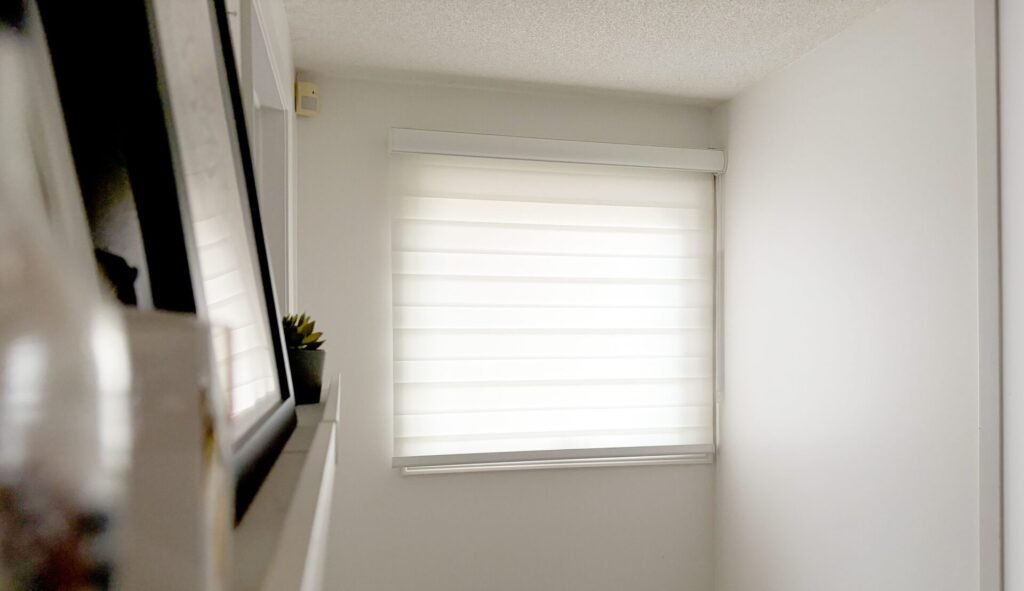
This is one of the most important questions to ask before choosing Zebra blinds — and the honest answer is: no, not at night. When your interior lights are on and it’s dark outside, light passes through the sheer alternating bands, and silhouettes can be visible from outside. For rooms where full nighttime privacy matters (bedrooms, bathrooms), we typically recommend pairing Zebra blinds with a blackout liner, or choosing a solid roller shade in blackout fabric for those specific rooms.
Q: What openness percentage (1%, 3%, or 5%) do I need for privacy — can people see inside during the day?
This is the question most clients are really asking when they ask about openness factor. During the day, solar shades work in your favor: the brightness outside makes it very difficult for passersby to see in, even at a 5% openness. However, once the sun sets and your interior lights are on, the equation reverses — the lighter the weave, the more visible your silhouette becomes from outside. For rooms where daytime privacy is the priority (street-facing living rooms, home offices), a 3% openness strikes the right balance between view-through and discretion. For nighttime privacy, no openness percentage of solar shade is sufficient on its own — a blackout liner or dual roller system is the right solution.
To see how they’ll look in your space, you’re more than welcome to book an in-home consultation with us.
Q: Will these blinds prevent my hardwood floors and furniture from fading?
Solar shades in particular are excellent at blocking UV rays — most block 95% or more even at a 5% openness. This meaningfully slows UV-related fading on floors, furniture, and artwork. No treatment eliminates fading entirely, but a quality solar shade is one of the most effective passive tools available for protecting your interiors.
Functionality & Mechanisms
Q: How reliable are the cordless “push-to-lift” mechanisms? Do they lose tension over time?
Cordless mechanisms are very reliable in the first three to five years of regular use. Some spring tension reduction can occur over time, particularly in heavier shades or in rooms with significant temperature swings (like sunrooms). The good news: spring tension on most cordless systems can be reset without replacing the shade. We walk every client through this simple process after installation, and it’s rarely more than a two-minute fix.
Q: Are “Top-Down Bottom-Up” shades sturdy, or do they tend to hang crookedly?
When correctly measured and installed, top-down bottom-up shades are quite stable. Crooked hanging is almost always a sign of incorrect deduction measurements during the sizing process — not a flaw in the mechanism itself. Because these shades carry two operating rails, precision in ordering is critical. This is exactly why we handle measurements ourselves rather than asking clients to self-measure.
Q: Can I have a solar shade for the day and a blackout roller for the night in one system?
Yes — this is called a dual roller or day-night shade system. Two separate fabric rolls are housed in a single headrail: one sheer or solar fabric for daytime use, and one blackout for evenings. It’s a clean, minimalist solution that eliminates the need for two separate sets of hardware. It does require a slightly deeper window frame or ceiling clearance, which we assess during consultation.

Installation & Fit
Q: My window frame is very shallow — will the blinds protrude (Outside Mount) or fit inside?
Inside mounting requires a minimum frame depth, which varies by product — typically 1.5 to 3 inches depending on the headrail and bracket size. If your frame is shallower than required, an outside mount is the right approach. Outside mounts are actually preferred by many designers as they visually extend the window height and wall coverage. We always check frame depth during our site visit.
Q:How can we minimize the light gaps on the sides of rollers in my bedroom?
Standard roller shades will always have some light gap at the sides — this is inherent to the design. To reduce this significantly, we offer side-channel (U-channel) tracks that guide the fabric edge to the wall, eliminating most lateral light bleed. For a true blackout room, side channels plus a blackout fabric are the combination we recommend.

Q: My window is 90 inches wide — will a single roller shade be too heavy to operate manually?
At 90 inches wide, a single roller in most standard fabrics is operable manually but can feel heavy with repeated daily use. We typically recommend a motorized solution for widths over 84 inches — it’s more comfortable, extends the life of the fabric and mechanism, and adds genuine convenience. If budget is a consideration, a split (two-panel) installation is another elegant option.
Style & Design
Q: Are vertical blinds “outdated”? What is a modern alternative for my sliding patio door?
Vertical blinds in the traditional vinyl sense are very much a product of the 1990s. For sliding patio doors today, we recommend either a vertical-panel track system (clean, architectural fabric panels that slide like a screen), a wide-format roller shade with a wall-mounted track, or a sheer drapery panel. Each of these updates the look dramatically while keeping the functional need to access the door easily.
Q: Should the blind color match my window trim (white) or my wall color?
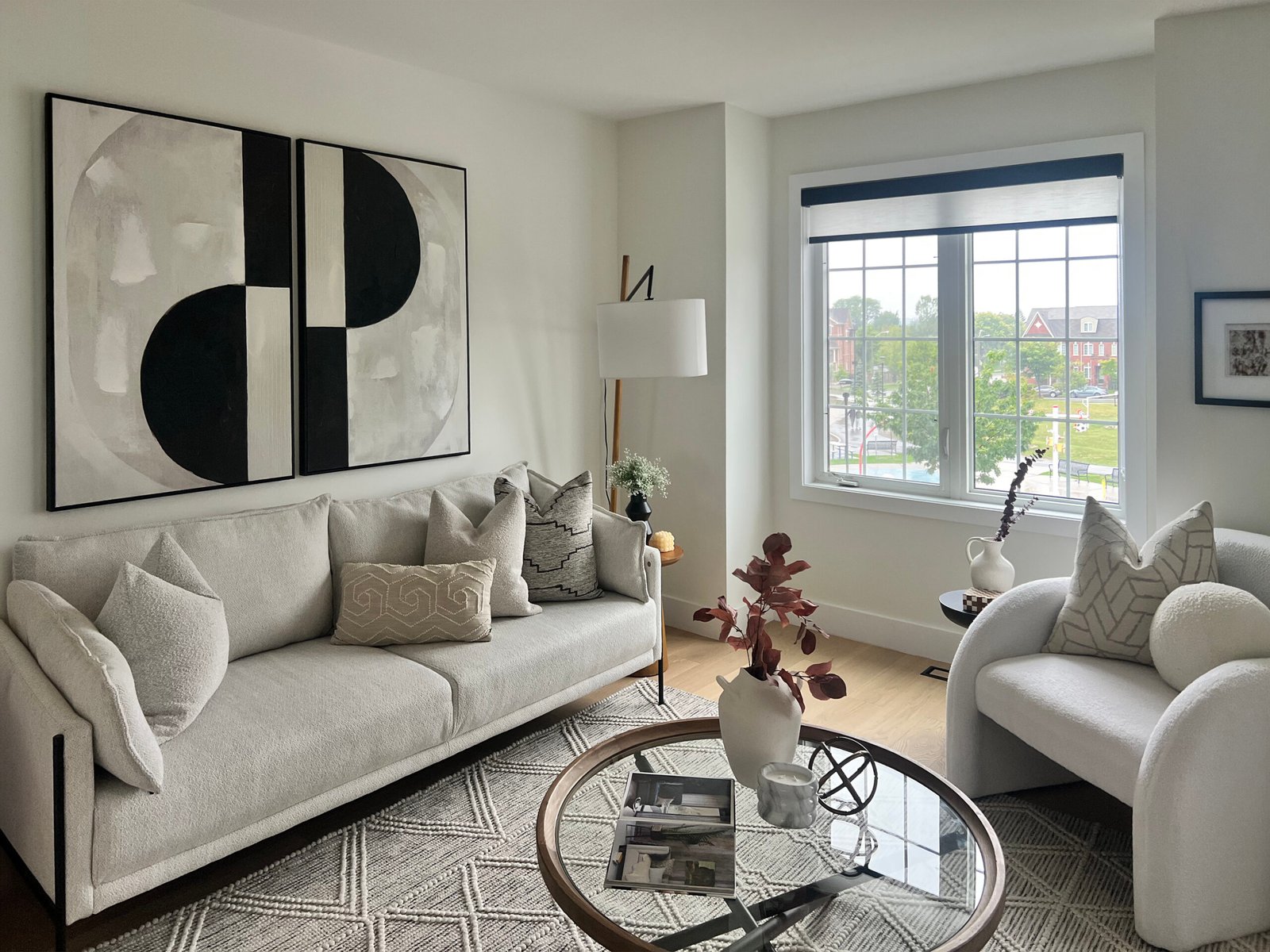
There’s no single right answer, but the approach we see working most consistently in high-end interiors is to match the blind to the wall color, not the trim. This recedes the window treatment into the room, making ceilings feel higher and the space feel more cohesive. Matching to white trim is the more traditional approach — it reads as “neat and tidy” rather than architectural. Choose based on the look you’re after.
For more samples of different color combinations, feel free to have a look at our Featured Works.

Practical & Product FAQs
Q: How do I clean the vanes of a Silhouette-style sheer horizontal shade?
Use a can of compressed air or a hair dryer on a cool setting — that’s the safest and most effective method. For stubborn dust, a soft brush attachment on a low-suction vacuum works well. Avoid damp cloths; the vane fabric can distort when wet, and Silhouette-style shades are not submerge-washable.
Q: How long is the wait time for custom Zebra blinds versus standard rollers?
All our blinds are custom-made, with a lead time of 2 to 3 weeks from order confirmation. Zebra blinds typically sit at the higher end of that window due to the precision required in aligning the alternating bands. Lead times may extend slightly during peak seasons — we confirm your exact timeline at order so there are no surprises.
Have a question that isn’t covered here? We’re always happy to talk through the details — no pressure, no sales script. Just honest advice from people who genuinely love this work.
For more information on our blinds, feel free to check out our Product-Blinds section.