
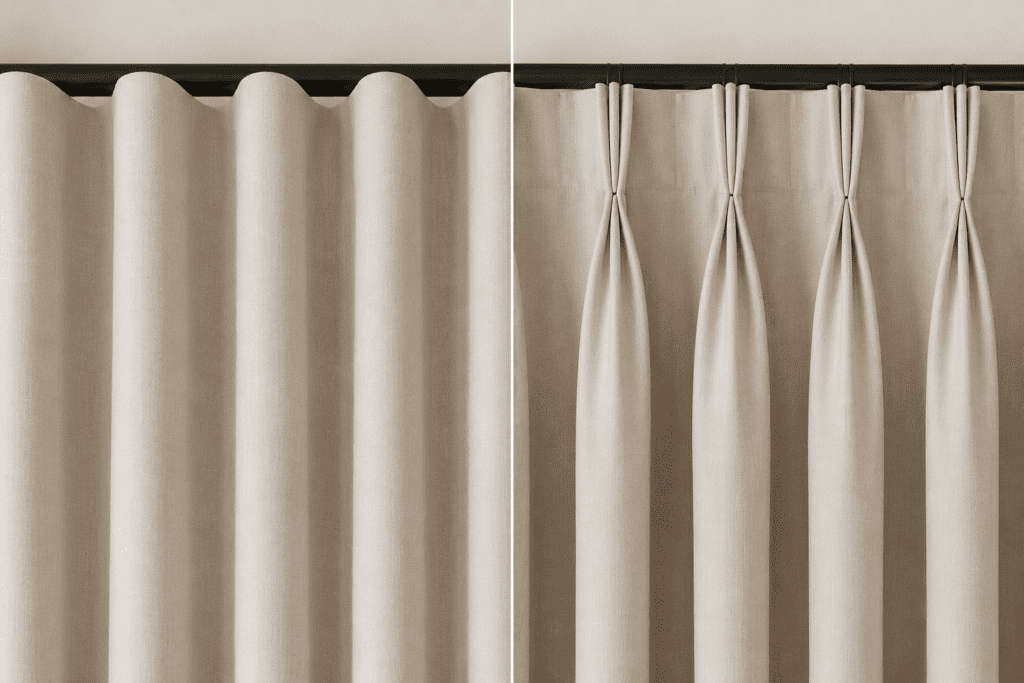
The pleat is the first decision in any custom drapery project, and it’s the one homeowners are given the least help with. Before fabric, before colour, before lining — the header style is what decides whether your finished drapery reads modern and architectural, or tailored and classic. Get it right and the rest of the room follows. Get it wrong and even beautiful fabric can feel slightly off.
Two styles cover almost every Toronto home we work in: ripplefold and pinch pleat. This guide walks through what each one actually is, where each one shines, and how to choose for your own windows — with real Toronto projects to show what they look like in a finished room.
What is ripplefold? (also called S-fold or wave fold)
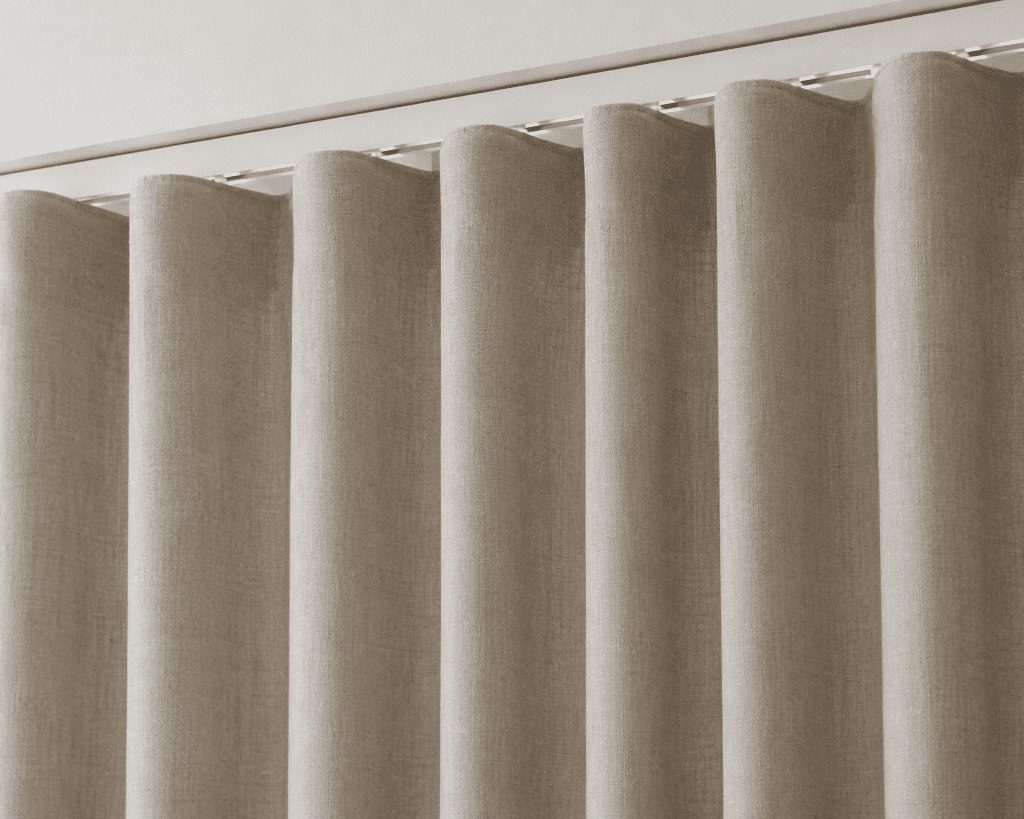
Ripplefold drapery hangs from a track using a continuous tape of carriers, which pulls the fabric into a smooth, uniform S-curve from one end of the panel to the other. There’s no gap between folds and no flat spot — just one even wave, the full width of the window.
The look reads modern and architectural. Because the wave is continuous, ripplefold tends to suit wide spans of glass especially well: floor-to-ceiling windows, patio doors, and the kind of open-concept condo walls common across Toronto’s newer builds. It’s also a style that pairs particularly well with motorization, since the track-and-carrier system is built to glide smoothly on a remote, schedule, or voice command.
Is S-fold the same as ripplefold? Yes. S-fold, wave fold, and ripplefold all describe the same continuous-wave look — the names are mostly regional or brand-specific, and a few fabrication systems have small mechanical differences, but the finished drape is the same style.
One of our favourite examples of this look: floor-to-ceiling ripplefold sheers in a Bridle Path great room, where the wave runs unbroken across nearly five metres of glass.
Curious what this looks like in your own custom drapes and curtains, or want it tied into a smart motorization system? Both pair naturally with ripplefold.
What is pinch pleat?
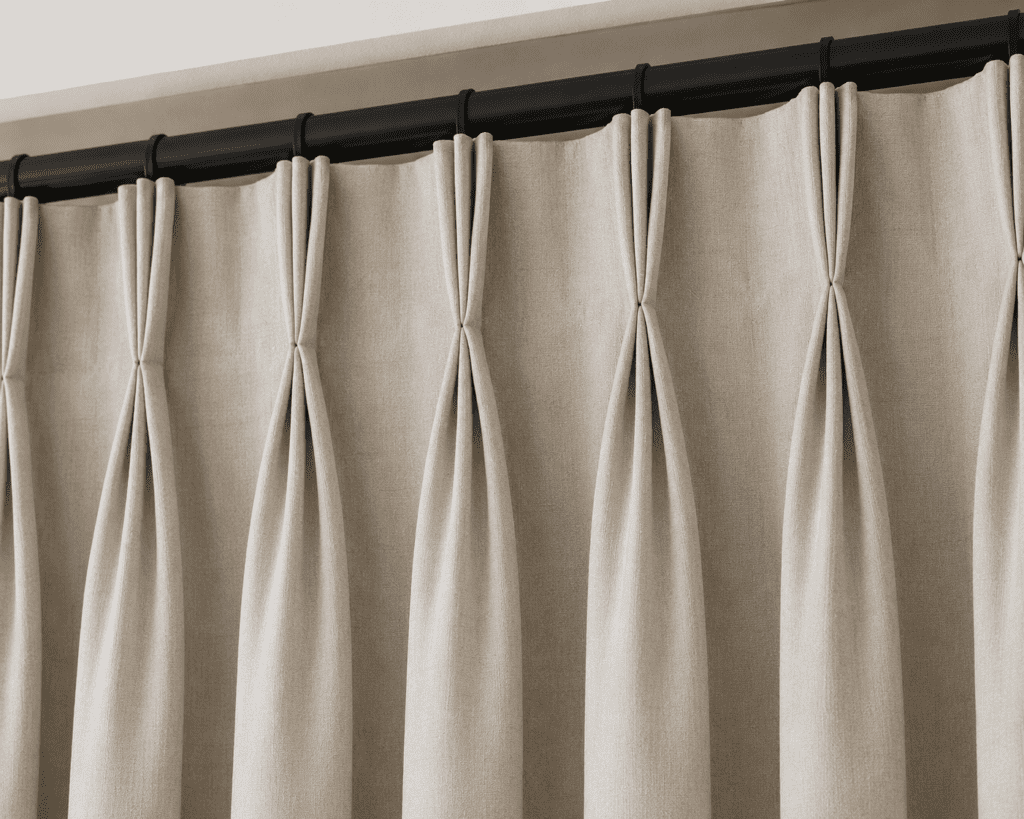
Pinch pleat drapery gathers the fabric into structured, evenly spaced pleats at the top of the panel — usually in groups of two, three, or four folds — then lets it fall in soft, repeating folds below. It can hang from a decorative rod with rings or from a track, and it’s the style most people picture when they think of “classic curtains.”
Where ripplefold reads modern, pinch pleat reads tailored and formal. It’s the natural choice for traditional living rooms, dining rooms, and character homes where a decorative rod and finial are part of the look. The structure holds its shape well when the drapery is tied back during the day, which is part of why it remains the standard choice for more formal spaces.
Pinch pleat panels work beautifully in heavier fabrics — we’ll cover which fabrics pair best with each pleat style below.
Ripplefold vs pinch pleat: side-by-side comparison
| Ripplefold (S-fold) | Pinch pleat | |
|---|---|---|
| Overall look | Modern, continuous wave | Classic, structured folds |
| Best rooms | Condos, wide glass, patio doors, contemporary spaces | Living and dining rooms, traditional and transitional interiors |
| Hardware | Track, often ceiling-mounted | Decorative rod or track |
| Stack-back when open | Compact and even | Fuller — needs more wall space beside the window |
| Motorization | Excellent — built for tracks | Possible, but track-dependent |
| Everyday use | Glides and re-stacks evenly every time | Pleats may need occasional dressing to keep their shape |
| Overall feel | Quiet and architectural | Tailored and formal |
How to choose for your space
Window size and shape. Wide, tall windows — full walls of glass, patio doors, double-height great rooms — tend to favour ripplefold. The continuous wave handles long spans without looking busy, and there’s no decorative rod to interrupt the sightline.
Interior style. Contemporary and minimalist interiors lean ripplefold. Traditional, transitional, and character homes — including many of Toronto’s older detached houses — usually suit pinch pleat better, especially alongside existing millwork and decorative hardware.
Room and function. Bedrooms and media rooms that you’ll want to open and close daily benefit from ripplefold’s smooth, motorized glide. Formal living and dining rooms, where the drapery is mostly tied back as a finished frame for the window, are where pinch pleat earns its keep.
A Toronto-specific note: we see ripplefold dominate in the wide-glass condos and new builds going up across the city, while pinch pleat remains the favourite in century homes and more traditional detached properties in neighbourhoods like Forest Hill and Rosedale.

Fabric changes the result
The pleat sets the shape; the fabric sets the mood — and the same pleat can look completely different depending on what it’s made from.
- Sheer drapery in either pleat style filters daylight into a soft glow. Ripplefold sheers feel especially light and continuous across wide windows.
- Linen drapery brings natural texture and a relaxed fall — beautiful in pinch pleat for a tailored-but-soft look, and equally striking in ripplefold for a more textural, architectural wave.
- Blackout drapery works in both pleats, though pinch pleat’s fuller folds add a touch more visual weight, which some bedrooms and media rooms benefit from.
See it in real Toronto homes
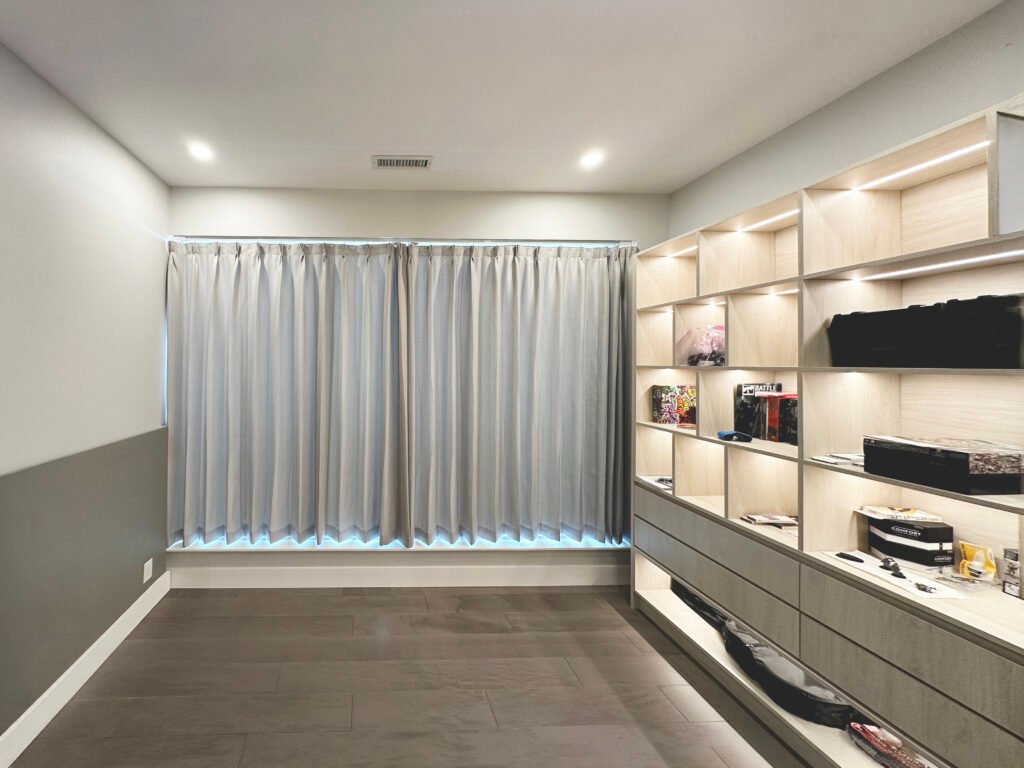
Photos help here more than description ever will. Our project gallery includes a full-home installation in Bridle Path built almost entirely around ripplefold — including an oversized custom zebra blind and dual-layer ceiling-track ripplefold drapery spanning a five-metre staircase window, where the continuous wave was the only header style that could carry that scale without a single visible seam. Alongside it sit projects in Forest Hill, where pinch pleat and layered drapery were chosen to suit a more traditional interior — proof that the “right” pleat really does depend on the room, not a single trend.
Frequently asked questions
Is S-fold the same as ripplefold or wave fold?
Yes — S-fold, wave fold, and ripplefold all refer to the same continuous-wave header style. The terms are largely interchangeable; any differences come down to the specific track and carrier system used to make the fold.
Does ripplefold use more fabric than pinch pleat?
Generally, yes. Ripplefold typically requires roughly double the fabric width to maintain its continuous wave, while pinch pleat usually needs about 2 to 2.5 times the track width. The exact amount depends on the fabric weight and the fullness you choose.
Can I mix both styles in the same home?
Absolutely. Many of our Toronto clients use ripplefold in open-concept and contemporary spaces — living rooms, kitchens, primary bedrooms — and pinch pleat in more formal or traditional rooms, like a dining room or a study. There’s no rule that says one home needs to commit to a single pleat.
Which pleat is best for motorized drapery?
Ripplefold is generally the better match. Its track-and-carrier system is purpose-built for smooth, quiet motorized movement, whether you’re using a remote, an app, or voice control. Pinch pleat can also be motorized on a track, but it isn’t quite as seamless.
Is there a price difference between the two?
Pricing depends primarily on fabric, fullness, and hardware rather than the pleat style itself. Ripplefold’s track hardware and higher fabric usage can put it slightly above a comparable pinch pleat panel, but the gap is usually modest. We’ll give you an exact, all-inclusive quote during your free in-home consultation.
Which pleat holds its shape better over time?
Ripplefold tends to hold its even wave with very little maintenance, since the track and carriers do the work. Pinch pleat holds its structure well too, but the folds may benefit from an occasional steam or a light dressing by hand to keep them crisp, especially after the panels have been tied back for a while.
What about grommet (eyelet) curtains — are they an option?
Grommet curtains — known as eyelet curtains in the UK — hang from metal rings set into the top of the panel, with the rod threaded straight through, so the fabric falls into soft, rounded folds. It’s a relaxed, casual-leaning header and a popular everyday choice. For the tailored, made-to-measure look most of our Toronto clients are after, we usually lean toward ripplefold or pinch pleat, which give a cleaner, more architectural drape — but if you love the easy, informal feel of grommets, we’re glad to make them up in your chosen fabric.
Ready to choose your drapery?
The best way to decide is to see both styles in your own space, in your own light. We’ll bring our fabric library to your home, walk through which pleat suits your windows and your interior, and provide a free, no-obligation quote.
Book your free in-home consultation or explore our full range of custom drapes and curtains in Toronto.