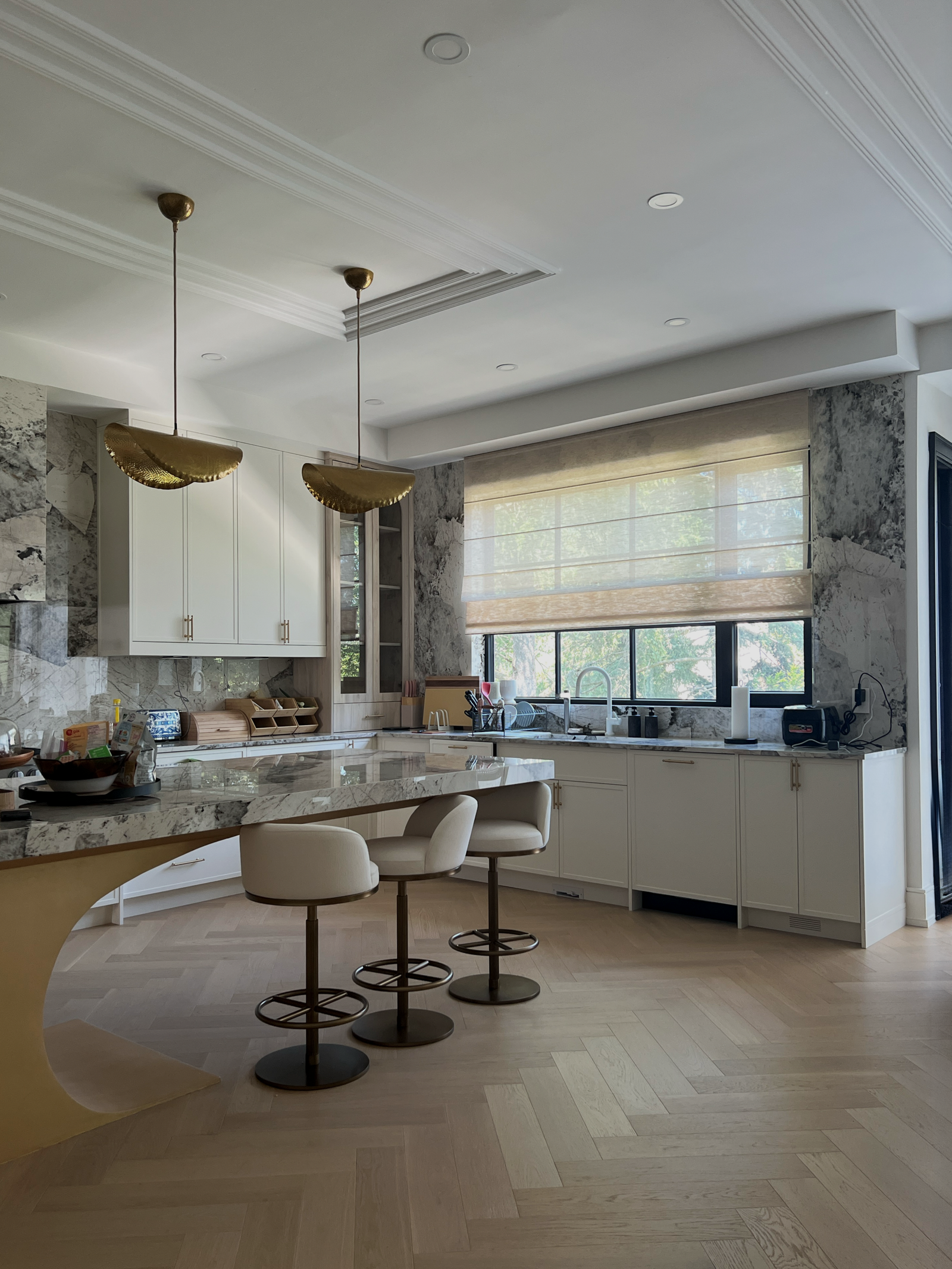
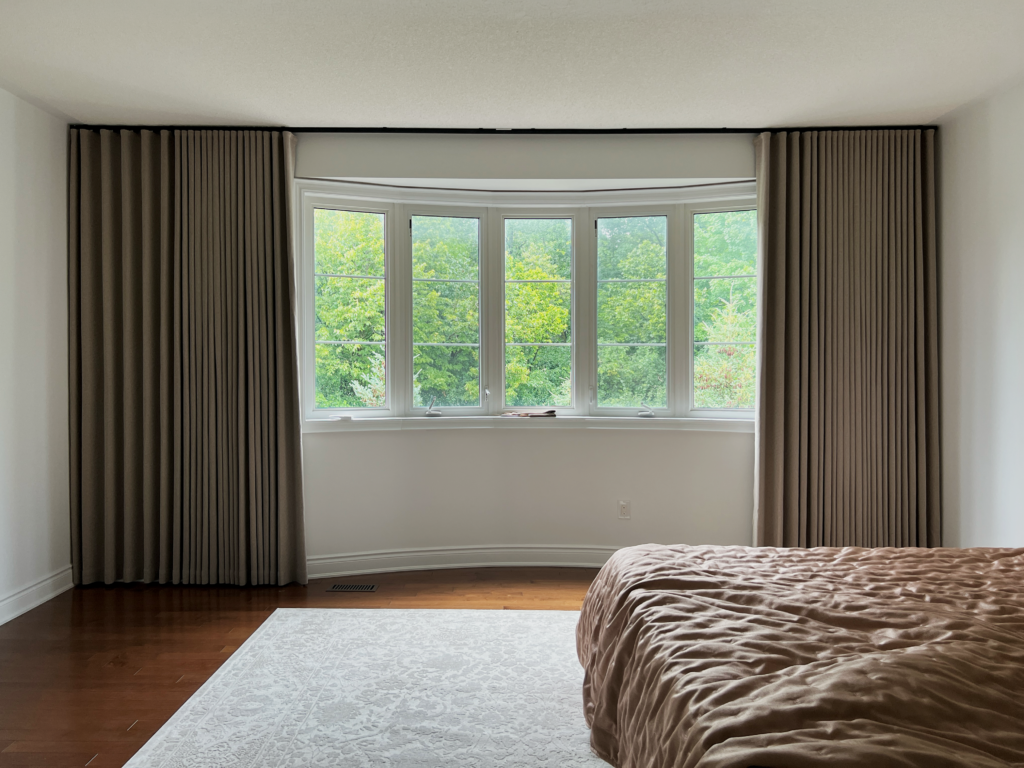
One of the most common questions homeowners ask when shopping for curtains is: How wide should curtains be?
Whether you’re decorating a condo in downtown Toronto, a new build in Markham, or a family home in Mississauga, curtain width plays a major role in how your windows look and function. Curtains that are too narrow can appear flat and unfinished, while properly sized drapery creates fullness, elegance, and a custom-designed look.
In this guide, we’ll explain how curtain width is calculated and how professionals determine the right amount of fabric for different window styles.
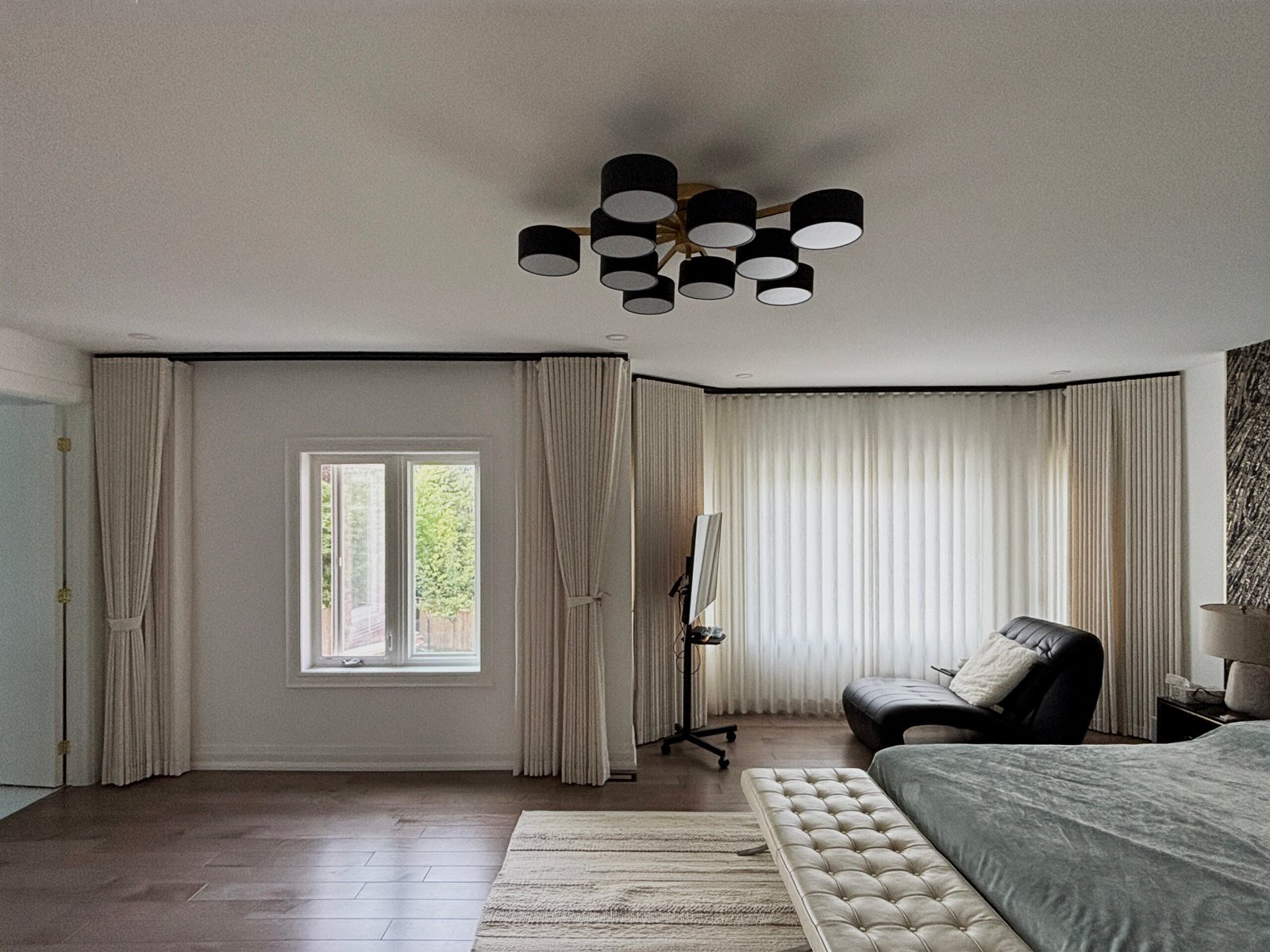
Why Curtain Width Matters
Curtains are not meant to be the same width as your window.
A common mistake is measuring a 60-inch-wide window and purchasing 60 inches of curtain fabric. The result is a flat appearance with little to no folds, making the window treatment look inexpensive and unfinished.
Proper curtain width creates:
- Beautiful folds and pleats
- Better light control
- Improved privacy
- A fuller, more luxurious appearance
- Better proportions for large windows
The wider the curtain relative to the window, the more fullness it will have.
The General Rule: Curtains Should Be Wider Than the Window
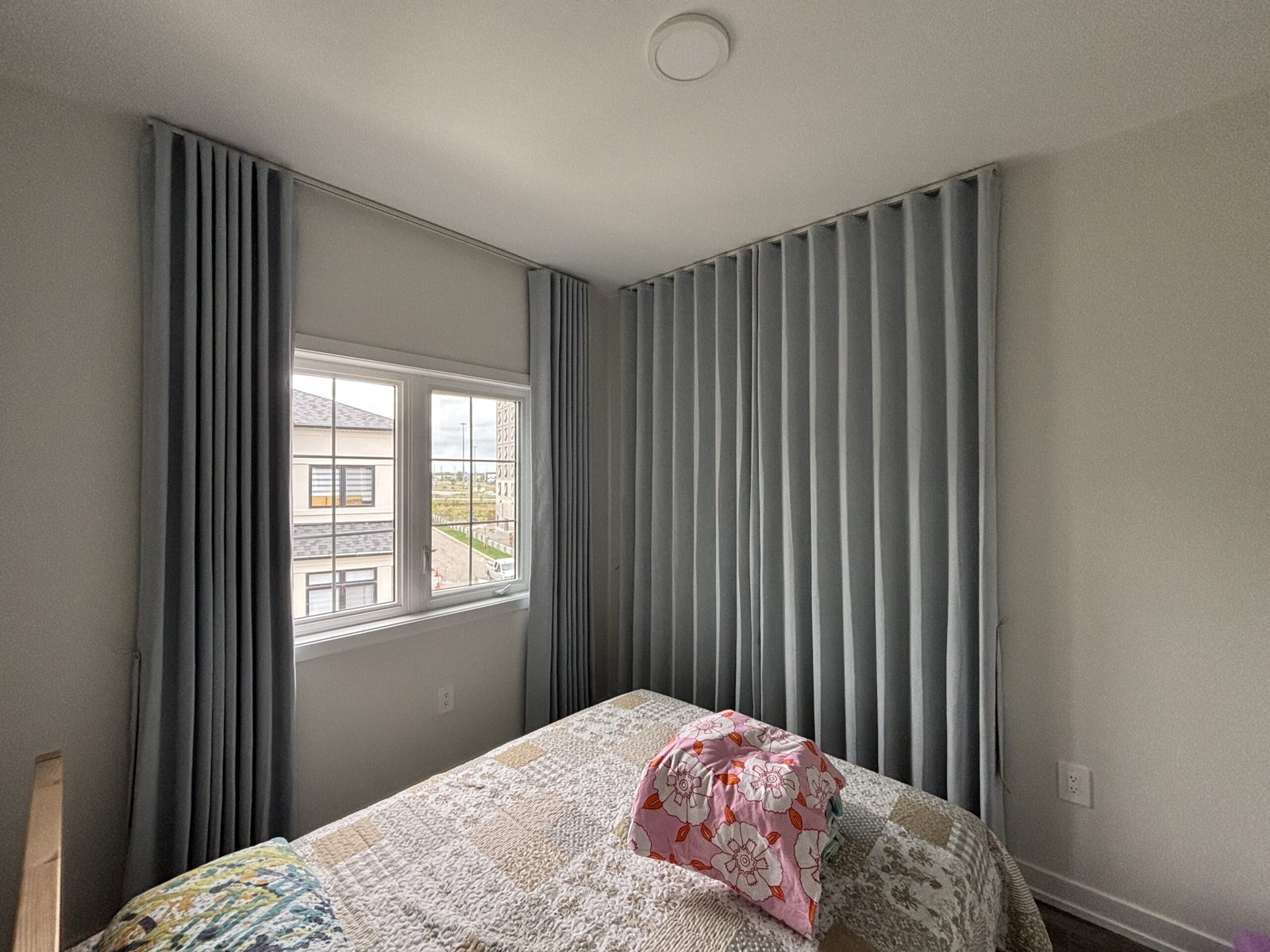
Professional drapery is typically calculated using a fullness ratio, which compares the total fabric width to the width of the track or rod.
2x Fullness
A 60-inch window would use approximately 120 inches of fabric.
This level of fullness works well for:
- Simple decorative drapery
- Casual curtain styles
- Some ripple fold systems
The look is clean and modern without appearing overly heavy.
2.5x Fullness
A 60-inch window would use approximately 150 inches of fabric.
This is one of the most popular options for custom drapery because it provides:
- Richer folds
- Better fabric movement
- A more upscale appearance
It works particularly well with pinch pleat curtains and decorative drapery panels.
3x Fullness
A 60-inch window would use approximately 180 inches of fabric.
This level of fullness is often used for:
- Luxury homes
- Statement drapery
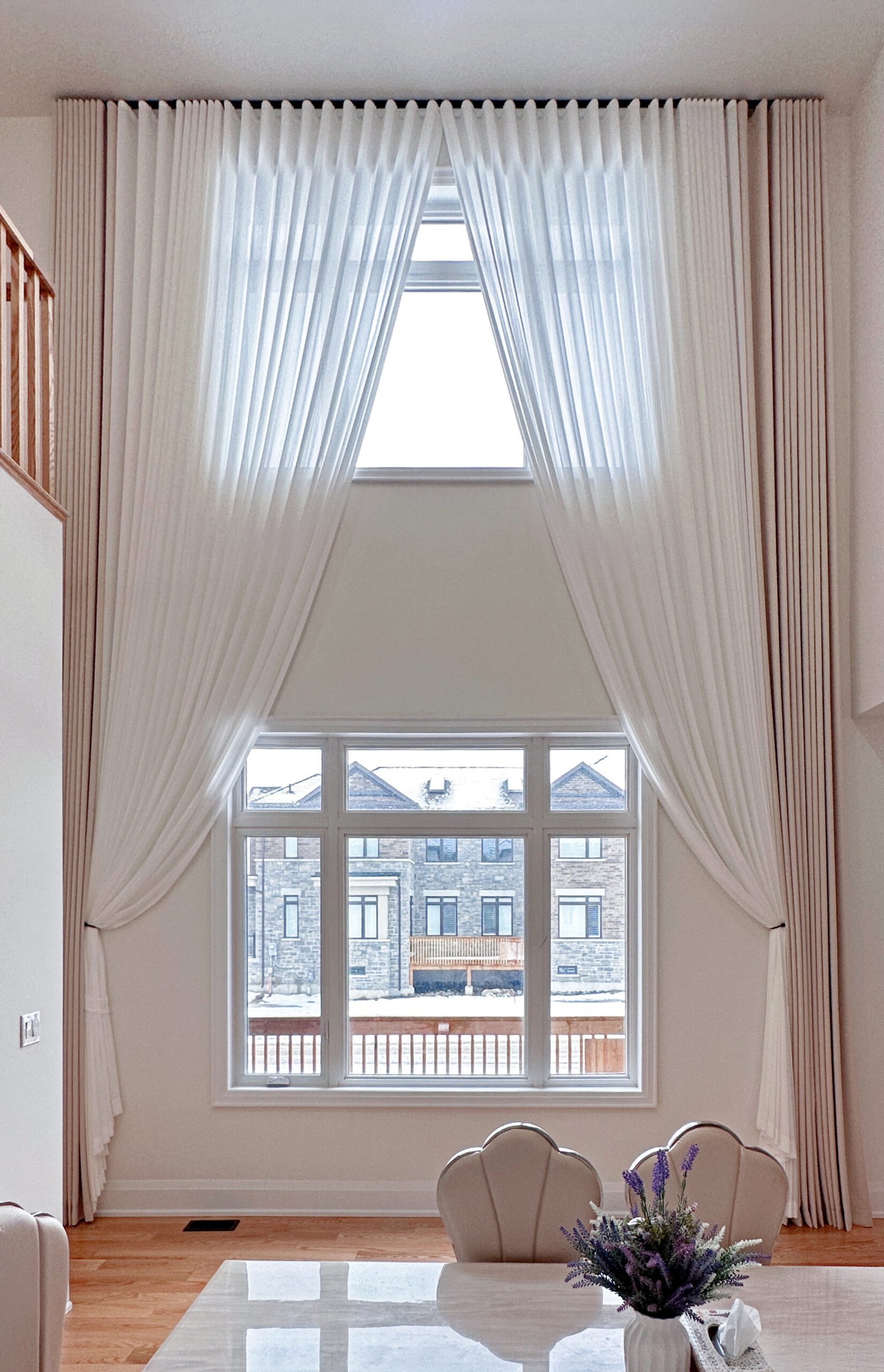
- Sheer curtains
- Formal living rooms
The folds appear deeper and more dramatic, creating a high-end designer look.
How Wide Should Ripple Fold Curtains Be?
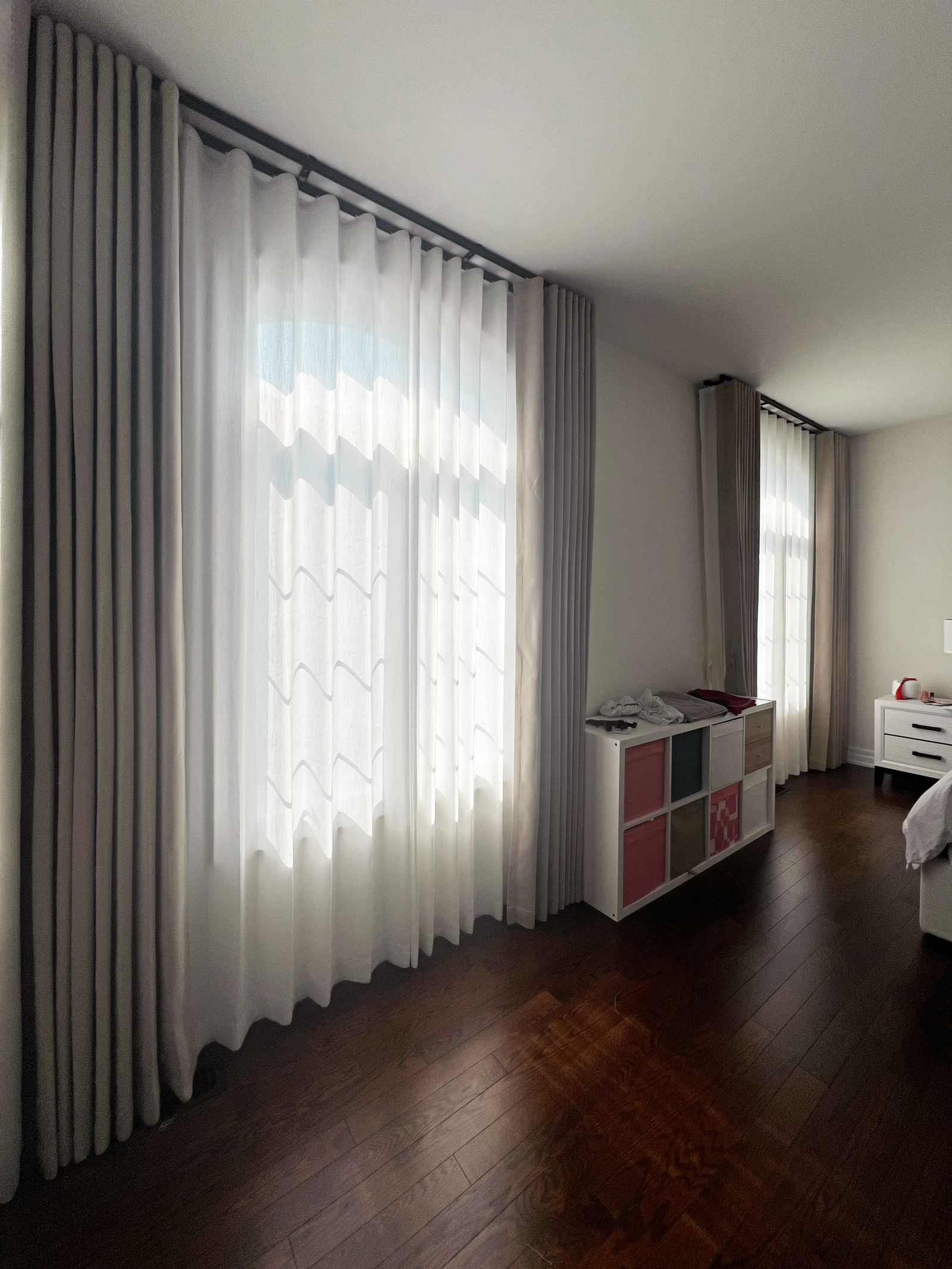
Ripple fold drapery uses a different calculation than traditional curtains.
Instead of measuring the fabric width directly, designers calculate the fullness based on the track width.
Most custom ripple fold systems use approximately:
- 2.0x fullness for a clean contemporary look
- 2.2x to 2.3x fullness for a more luxurious appearance
For example:
A 100-inch-wide track may require approximately 220 to 230 inches of fabric to achieve elegant, consistent waves.
Many premium custom drapery installations in Toronto homes use around 2.3x fullness because it creates a richer appearance without looking bulky.
Large Windows Need More Than Glass Coverage
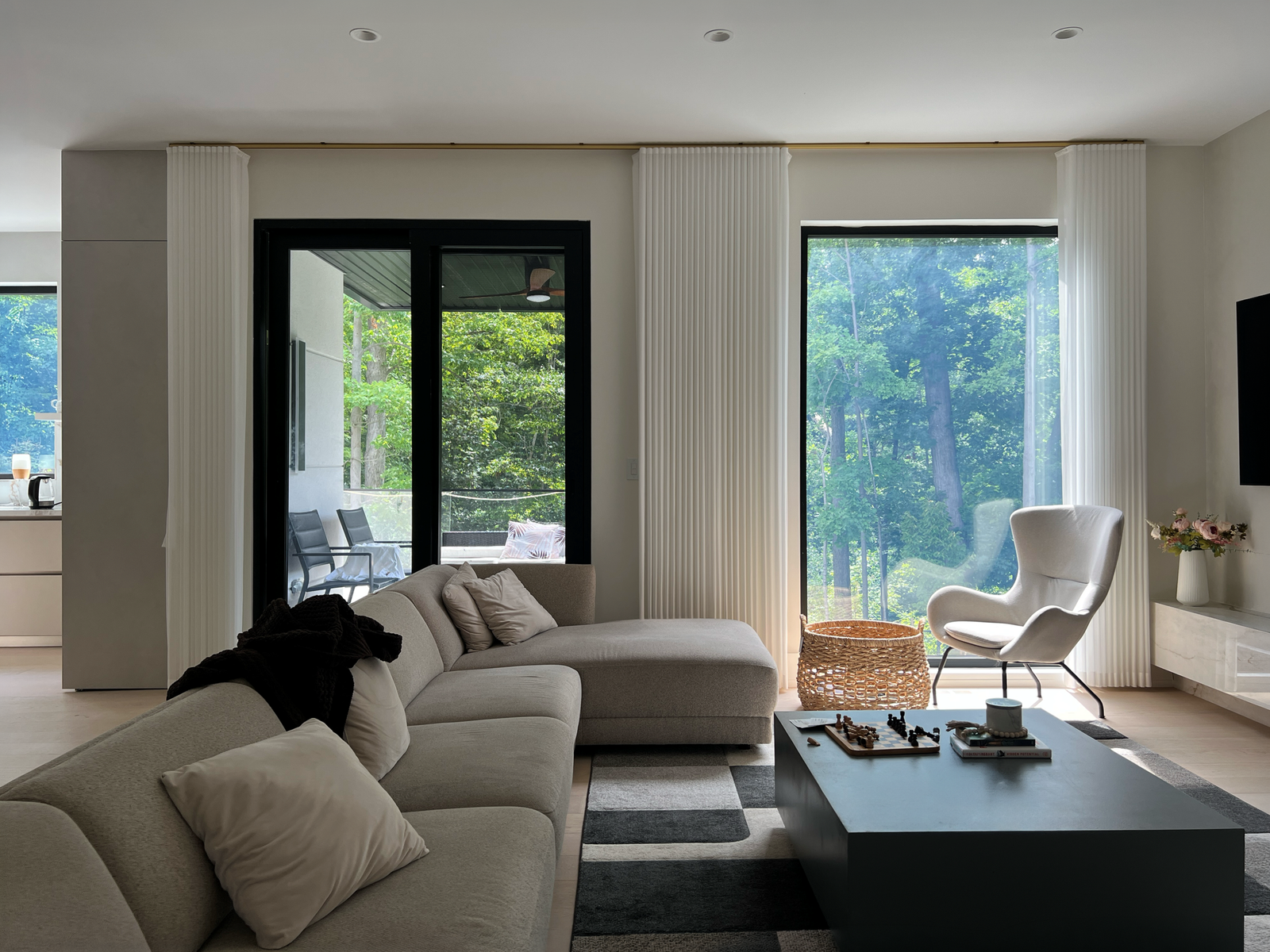
When measuring curtains, it’s important to consider more than just the glass itself.
Professional designers often extend drapery beyond the window frame to include space for:
- Window trim
- Stack-back area
- Decorative overlap
This allows the curtains to open fully without covering too much of the glass.
Benefits include:
- More natural light
- Better outdoor views
- Larger-looking windows
- Improved room proportions
This is especially important for:
- Floor-to-ceiling windows
- Large living room windows
- Patio doors
- Two-storey great rooms
Common Curtain Width Mistakes
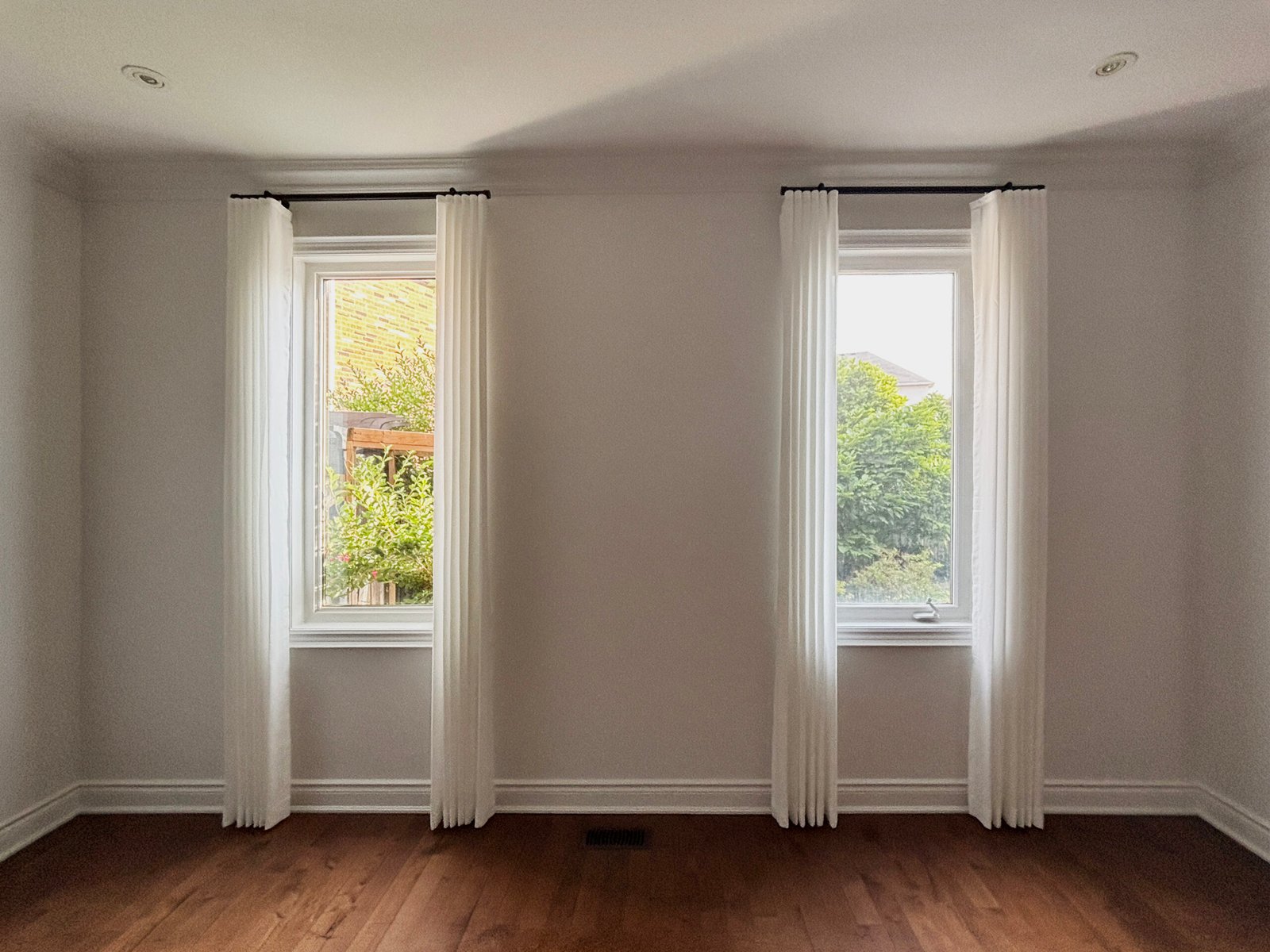
Choosing Curtains That Match the Window Width
If your window is 80 inches wide, using 80 inches of curtain fabric will result in a flat appearance with almost no folds.
Curtains should always be significantly wider than the window itself.
Forgetting About Stack Back
Many homeowners measure only the visible glass.
However, curtains need space to stack when opened. Without accounting for stack-back, the drapery may block part of the window even when fully open.
Prioritizing Cost Over Fullness
Reducing fabric width may save money initially, but it often results in curtains that look underwhelming.
A properly designed curtain will usually look more balanced and luxurious for years to come.
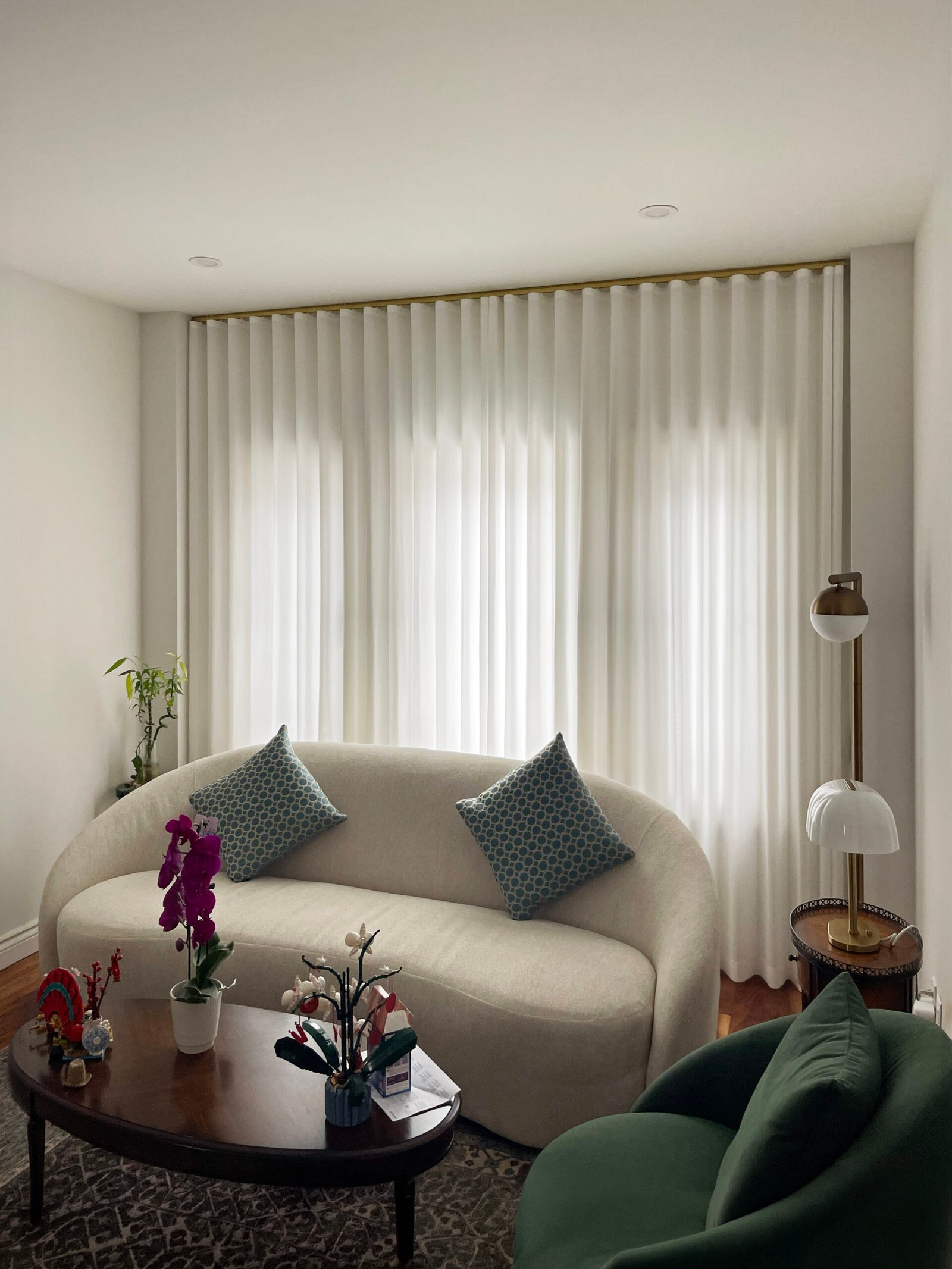
So, How Wide Should Curtains Be?
For most Toronto homes, a fullness ratio between 2x and 2.5x provides the best balance between appearance, functionality, and value.
As a general guideline:
| Curtain Style | Recommended Fullness |
|---|---|
| Decorative Panels | 2x |
| Ripple Fold Drapery | 2.0x – 2.3x |
| Pinch Pleat Drapery | 2.5x |
| Luxury Sheers | 2.5x – 3x |
The ideal width depends on:
- Window size
- Curtain style
- Fabric type
- Desired appearance
- Track or rod system
Because every window is different, custom measurements are often the best way to achieve a polished, designer-quality result.
Final Thoughts
Curtain width is one of the most important factors in creating beautiful window treatments. While ready-made curtains often prioritize standard sizing, custom drapery is designed around the exact dimensions of your window and the look you want to achieve.
Whether you’re covering a single bedroom window or designing window treatments for an entire home, choosing the right curtain width can make a dramatic difference in the final result. Contact us for more details!