

Quick answer
Choose a see-through sheer for backyard or upper-floor views, and a denser privacy sheer for street-facing windows. Linen gives a soft, textured look; polyester voile is smoother and easier to care for. For privacy at night, pair sheers with lined or blackout drapery on a double track.
Sheer curtains are a popular choice for Toronto homes, especially in living rooms and spaces with large windows. They soften natural light, add a layer of privacy and give a room a more finished look without making it feel closed off.
But not all sheer curtains look or perform the same way. Some fabrics let you enjoy a fairly clear view outside, while others provide more daytime privacy by softening the view from both sides. Linen and voile also have different textures, draping qualities and care requirements.
If you’re choosing custom sheer curtains for your home, it’s worth considering more than just the colour. Your window’s location, the amount of sunlight it receives and how much privacy you need all play a part.
Here’s what to look for, from choosing the right sheer fabric to finding a style that works with Toronto’s changing seasons.

Choosing Between See-Through and Privacy Sheers
One of the first things to consider when shopping for sheer curtains is how much you want to see through the fabric.
Some sheers are designed to keep the view relatively clear, while others have a tighter weave that offers more coverage during the day. Neither is better in every situation. It depends on where your windows face and how close you are to neighbouring homes or buildings.

See-Through Sheers: Keep the View, Soften the Light
If you have a nice backyard, an open view or windows on an upper floor, a more open-weave sheer may be the right choice.
These fabrics allow plenty of daylight through, so you can still enjoy the view outside. They take the edge off direct sunlight and add a soft finish to the windows without making the room feel enclosed.
They’re particularly well suited to homes with rear-facing windows, ravine views or open surroundings where daytime privacy isn’t a major concern.
For street-facing windows or homes with neighbours close by, however, a more open sheer may not provide enough coverage.
Privacy Sheers: More Coverage Without Losing Natural Light
For ground-floor rooms, street-facing windows and condos overlooking another building, a denser privacy sheer is often a better option.
The tighter weave helps soften the view from outside. Rather than seeing the details of your room, someone looking in will generally see light and less-defined shapes. You’ll still get natural daylight, although the view outside won’t be as clear as it would be through a more open fabric.
Privacy sheers work well in living rooms, dining areas and bedrooms where you’d like some daytime coverage without relying on heavier curtains.
What About Privacy at Night?
This is something worth knowing before choosing any sheer curtain: sheers aren’t designed to provide full privacy after dark.
During the day, outdoor light is usually brighter than the light inside your home, which helps limit visibility from outside. Once the sun goes down and your interior lights are on, the situation changes. Even a denser privacy sheer can reveal silhouettes and movement.
If you need privacy in the evening, consider pairing your sheer curtains with a second layer, such as lined or blackout drapery on a double track. You can keep the sheers closed during the day and draw the heavier curtains when you need more coverage at night.
This setup is particularly practical during Toronto’s shorter winter days, when many homeowners have their lights on by late afternoon.
| See-Through Sheers | Privacy Sheers | |
|---|---|---|
| Daytime view outside | Relatively clear, softened | Blurred or less defined |
| Daytime privacy | Limited | More coverage |
| Evening privacy | Limited | Still limited; silhouettes may show |
| Best suited for | Backyards, upper floors and open views | Street-facing windows, close neighbours and condos facing other towers |
Linen vs. Voile Sheer Curtains: What’s the Difference?
Once you’ve decided how much privacy you need, the next step is choosing the fabric.
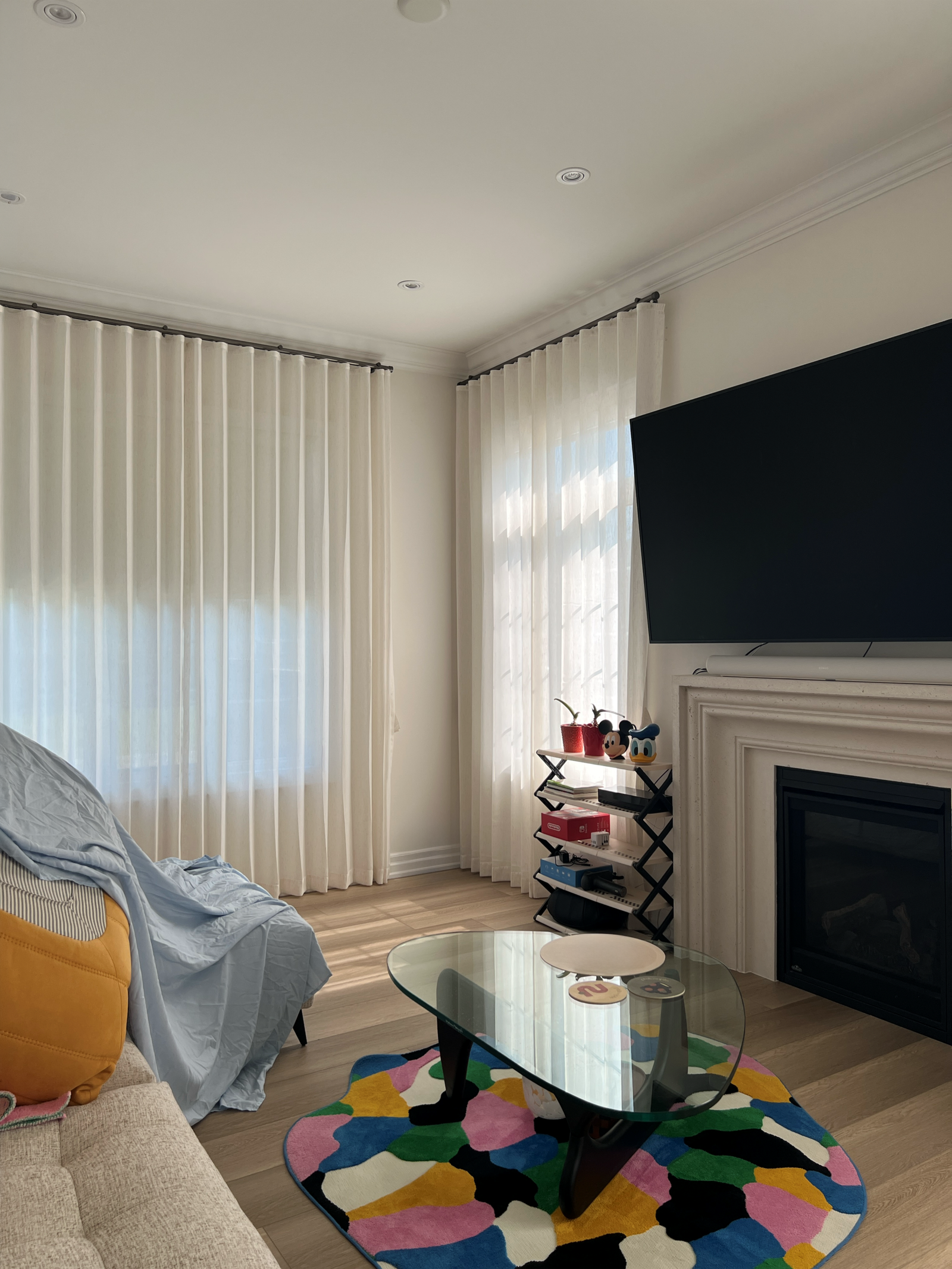
Linen and voile are two popular choices for custom sheer curtains. They both let natural light into a room, but the finished look is quite different. Linen has a more relaxed, textured appearance, while voile tends to look smoother and more uniform.

Linen Sheers: Natural Texture and a Relaxed Look
Linen sheers have a distinctive texture created by the natural variations in the yarn. You can see the subtle irregularities in the fabric, especially when sunlight comes through, giving the curtains a softer and more natural appearance.
They work particularly well in living rooms and dining rooms where you want a relaxed, understated look. The texture also helps soften the view through the fabric, although the level of privacy still depends on the weave and fabric density.
One thing to keep in mind is that linen naturally creases and can relax slightly over time. That’s part of its character, but it may not suit everyone.
If you like the look of linen but prefer a more consistent drape, a linen blend or linen-look polyester is worth considering. These options offer a similar aesthetic with greater stability.
Voile Sheers: A Clean, Light and Modern Finish
Voile is a fine, lightweight fabric with a smoother and more even surface. Polyester voile is a common choice for custom sheer curtains because it holds its shape well, resists creasing and is relatively easy to maintain.
Compared with linen, voile creates a more uniform appearance when daylight passes through. It suits contemporary interiors, condos and homes where a clean, understated finish is preferred.
Voile is also available in different weave densities. Some options are quite transparent, while others offer more daytime coverage. It’s best to look at a fabric sample against your actual window rather than judging it by appearance alone.
| Fabric | Overall Look | Privacy | Care | Works Well In |
|---|---|---|---|---|
| Linen and linen blends | Natural, textured and relaxed | Varies by weave; texture can soften the view | Natural linen creases more; blends are generally easier to maintain | Living rooms, dining rooms and traditional homes |
| Voile (polyester) | Smooth, light and modern | Available in more transparent and denser weaves | Easy to maintain and holds its shape well | Condos, kitchens, family rooms and sunny windows |
Choosing Sheer Curtains for Toronto’s Climate
Toronto’s seasons can have quite an impact on how your window coverings look and perform. A fabric that works beautifully in a bright summer living room may behave differently during a cold, dry winter.
Here are a few things to consider when choosing sheer curtains for your home.
Making the Most of Natural Light During Winter
Toronto winters can feel long, with plenty of overcast days and relatively short daylight hours. Around the winter solstice, there are only about nine hours of daylight.
For rooms that don’t receive much direct sunlight, sheer curtains are a practical way to soften the windows while keeping the space bright.
Colour makes a difference, too. A crisp white sheer can look cooler under grey winter skies, while ivory, cream and oatmeal tones tend to give a room a warmer feel.
Managing Strong Sunlight in Summer
South- and west-facing windows can receive quite a bit of direct afternoon sunlight, particularly during summer.
Sheer curtains help diffuse that light, reducing glare while keeping the room bright. For windows that receive prolonged direct sun, polyester voile or a suitable blend may be a practical choice, as natural fibres such as linen can be more sensitive to extended UV exposure.
If you’re also concerned about fading to hardwood floors, furniture or rugs, consider adding a lined drapery layer behind the sheers.
Changes in Humidity Throughout the Year
Indoor conditions in Toronto change considerably between heating season and summer.
Linen is a natural fibre, so it can respond to changes in humidity by relaxing or shifting slightly in length. This is worth considering if you prefer your curtains to maintain a very precise floor clearance throughout the year.
A linen blend may offer a more stable alternative, while polyester voile is generally a good option when a consistent drape and hem length are priorities.
Cold Windows and Condensation
Condensation can form on the inside of windows during colder weather, particularly in bedrooms, kitchens and condos.
If sheer curtains rest directly against cold glass or sit on a damp windowsill, the fabric may pick up moisture marks over time.
A properly positioned curtain track helps keep the fabric away from the glass. For most full-height windows, floor-length sheers are also a practical choice, as they avoid having excess fabric resting on the windowsill.

Which Sheer Curtains Work Best for Your Home?
The right sheer curtain style depends on your home’s layout, window size and interior design. Here are a few combinations worth considering.
- Condos with floor-to-ceiling windows: If your condo faces another residential tower, a privacy sheer can help soften the view from neighbouring units. Ripplefold sheers on a ceiling-mounted track create a clean, continuous look across large windows. The panels can also stack neatly to one side, keeping balcony doors accessible.
- Detached and semi-detached homes: You don’t necessarily need the same sheer fabric throughout the house. A denser privacy sheer may work better for front-facing windows, while a more transparent fabric can keep the backyard view open.
- New builds and double-height living rooms: For tall windows, fabric choice and weight matter. A linen blend with more body or a denser voile can help the curtains hang neatly over a longer drop.
- Century homes and traditional interiors: Textured linen sheers paired with pinch pleat headings and a decorative curtain rod can complement the character of older Toronto homes without looking overly formal.
Why Many Homeowners Choose a Double-Layer Curtain Setup
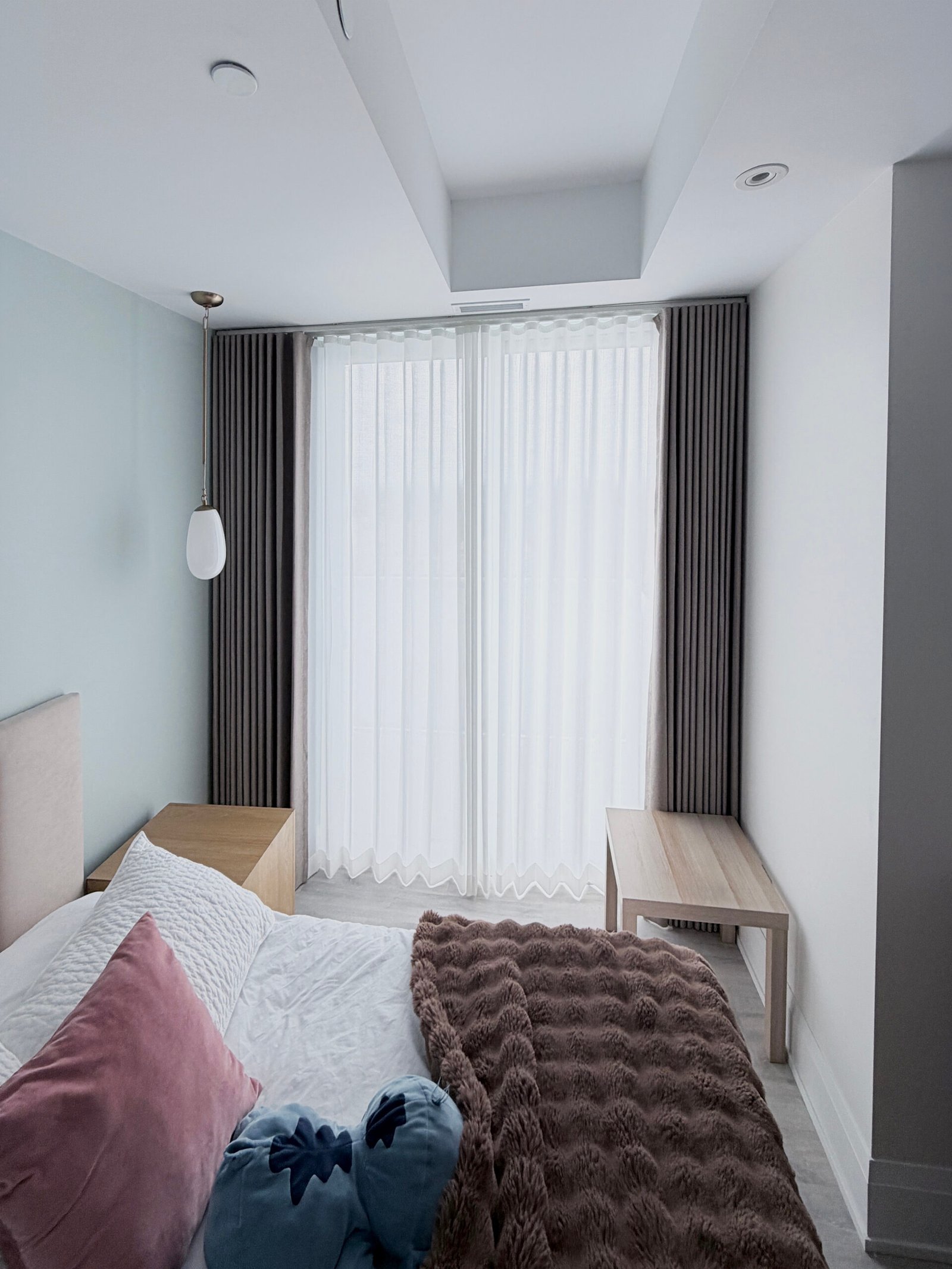
For many Toronto homes, sheer curtains work best when paired with a second layer of drapery.
The sheer sits closest to the room, allowing natural light in while softening the view during the day. A lined or blackout drape sits behind it, providing additional privacy and light control when needed.
With a double curtain track, both layers can move independently. You can leave the sheer closed throughout the day, then draw the heavier drapes in the evening or when you want to darken the room for sleeping.
Motorized curtain tracks are another option, especially for floor-to-ceiling windows, wide spans of glass or rooms with several curtain panels. Each layer can have its own motor, making it easier to adjust the curtains without having to reach across the room.
For a timeless look, neutral sheer fabrics remain a popular choice. White, ivory, oatmeal and soft greige work particularly well with light wood floors and understated interiors.
Getting the Right Fullness, Length and Curtain Track
The fabric is only part of the finished look. How your custom sheer curtains are made and installed also makes a noticeable difference.
A few details are worth discussing before placing your order.
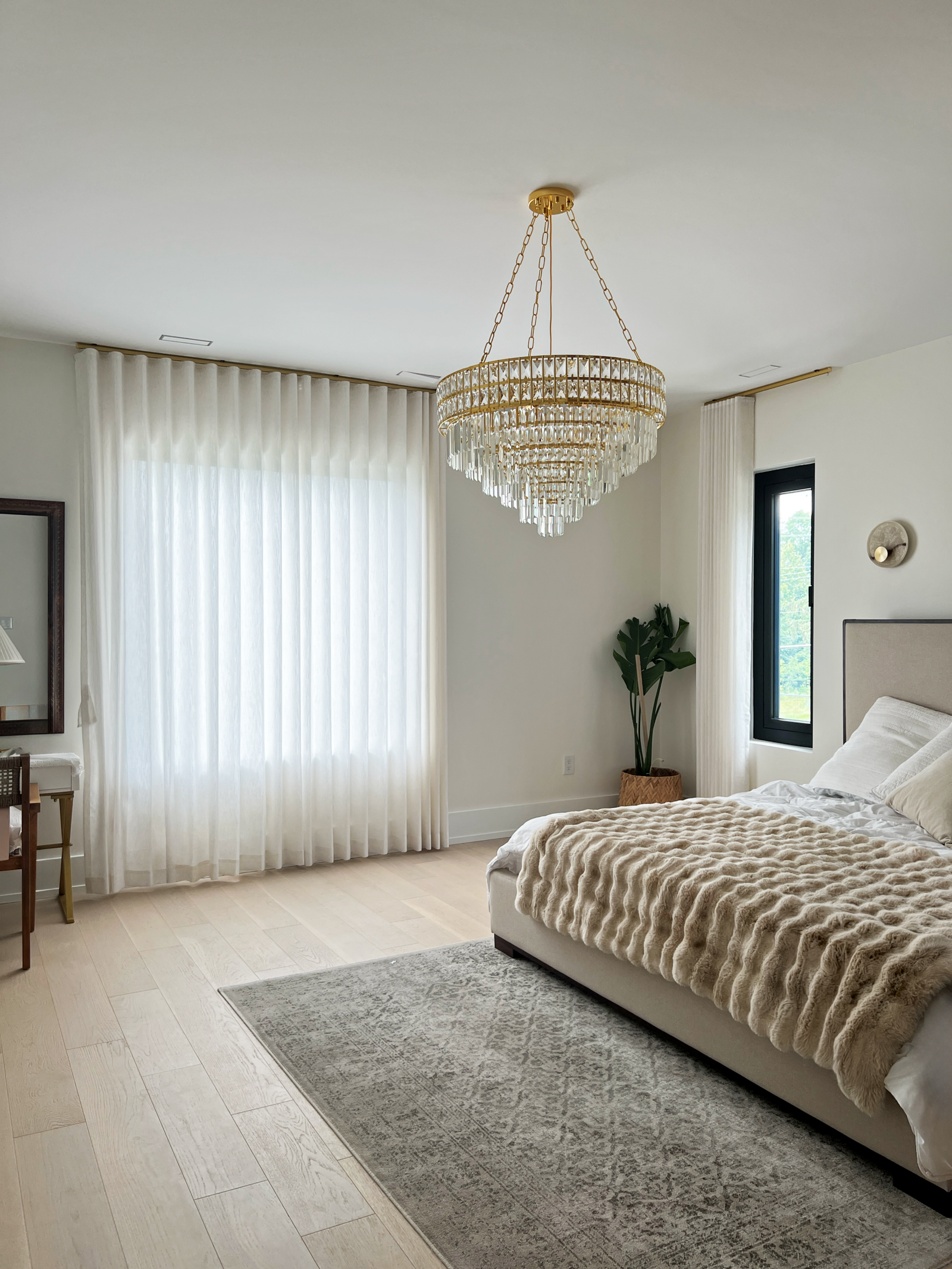
- Curtain fullness: Sheer curtains generally look better with more fabric than a flat, stretched-out panel. For a fuller, gathered appearance, we typically allow around 2 to 3 times the track width in fabric: about 2 to 2.3 times for ripplefold and 2.5 to 3 times for pinch pleat.
- Curtain length: Floor-length sheers usually create a more polished look than sill-length curtains. A hem that just clears the floor also helps keep the fabric clean.
- Track placement: Mounting the curtain track close to the ceiling, or directly on it, can make a room feel taller. This is particularly effective with floor-to-ceiling windows and large glass doors.
- Pleat style: Ripplefold is a popular choice for contemporary interiors and wide windows, while pinch pleat gives the curtains a more tailored, traditional finish. If you’re comparing the two, read our guide to Ripplefold vs. Pinch Pleat.
Getting these details right helps the curtains hang properly and gives the entire window a more considered finish.
How to Choose the Right Sheer Curtains
If you’re still deciding between different sheer fabrics, start with these four questions:
1. How close are your neighbours?
If your windows face an open backyard or have an unobstructed view, a more transparent sheer may be suitable. For street-facing windows or condos overlooking another building, look at denser privacy sheers.
2. Do you need privacy at night?
If you regularly use the room after dark and want to keep the interior out of view, plan for a second layer of lined or blackout drapery. A sheer alone won’t provide complete evening privacy.
3. How much direct sunlight does the room receive?
For windows with strong south- or west-facing sun, consider polyester voile or a suitable blend. Linen can be a lovely option for rooms with softer, less direct light.
4. What kind of finish do you prefer?
For a natural, textured appearance, look at linen and linen blends. If you prefer a smoother fabric with a clean, modern finish, voile is worth considering.
See How Sheer Curtains Look in Your Own Home
Choosing sheer curtains from a small fabric sample isn’t always easy. The same fabric can look quite different depending on the window direction, outdoor surroundings and amount of natural light in the room.
At Starlight Shutter, we bring fabric samples directly to your home so you can compare different sheer curtains in your own space. You’ll be able to see how each fabric looks against your windows, how much light comes through and how much of the view is visible from outside.
Our team provides professional measuring and custom curtain installation, helping you choose a fabric, fullness and track style that suit your home.
Explore our collections of custom sheer curtains, linen drapery and blackout curtains, or browse our full range of custom curtains in Toronto.
Ready to find the right sheer curtains for your home? Book a free in-home consultation. We’ll bring the fabric samples to you and help you find the right fit.