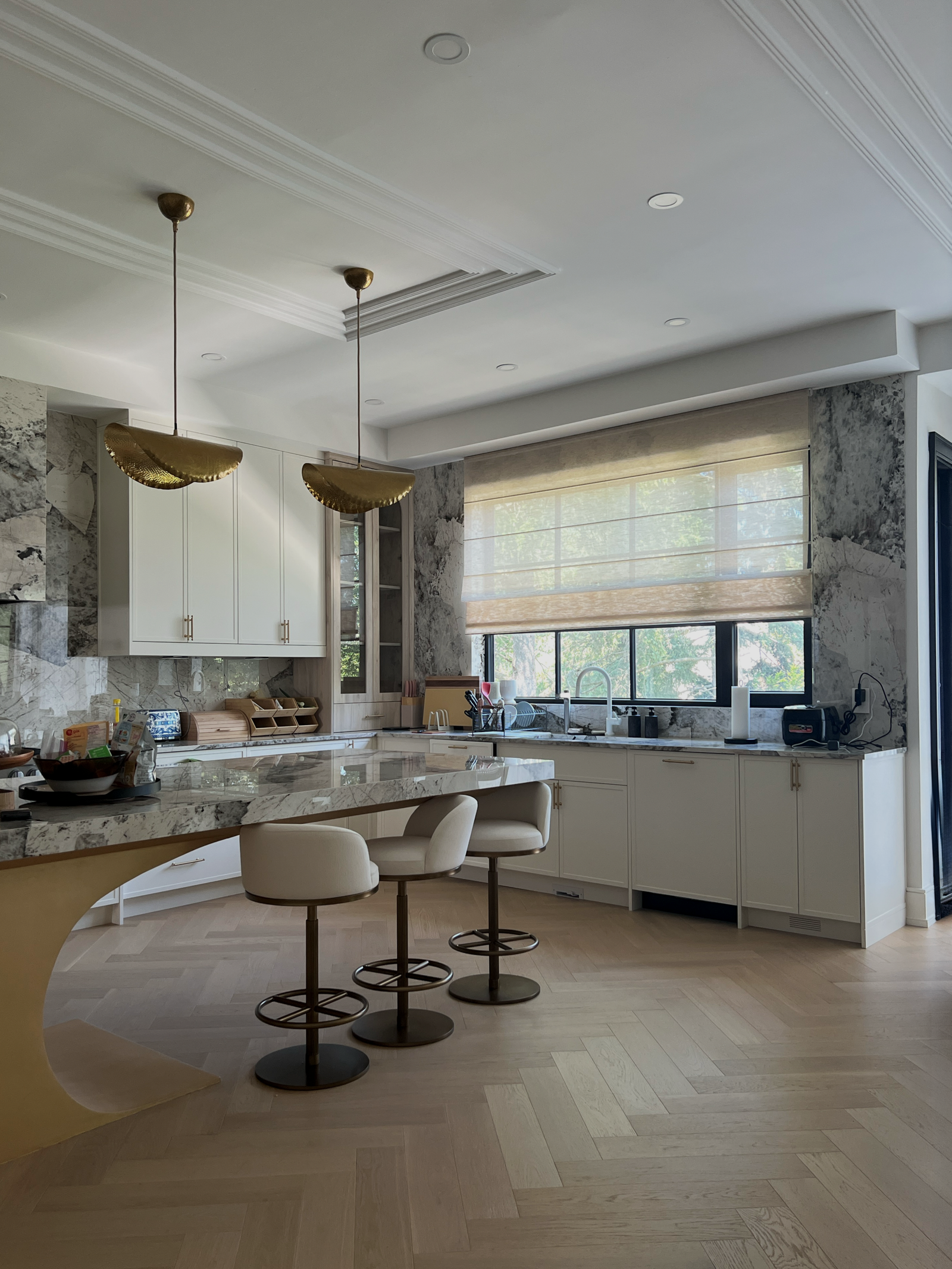
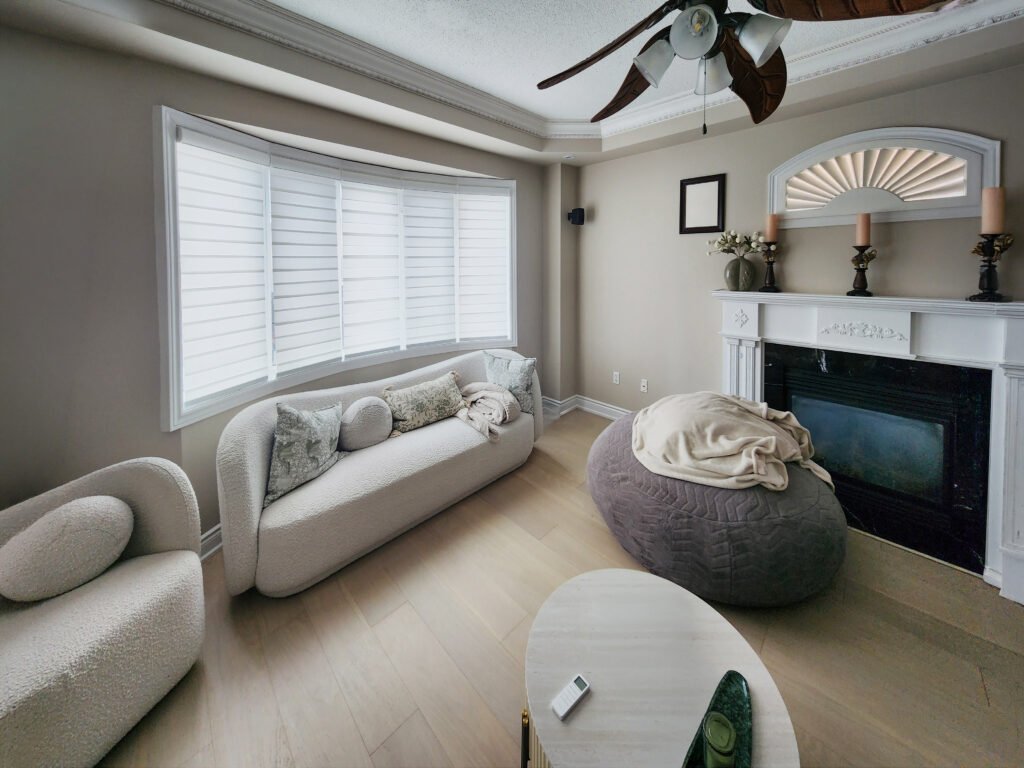
Zebra blinds — sometimes called dual-fabric or banded shades — have become one of the most requested window treatments we install across Toronto homes, from condos in the core to family homes in Scarborough and North York. They’re easy to love in photos. What homeowners actually want to know is simpler: will they hold up to daily life? Here’s what we tell every client who asks.
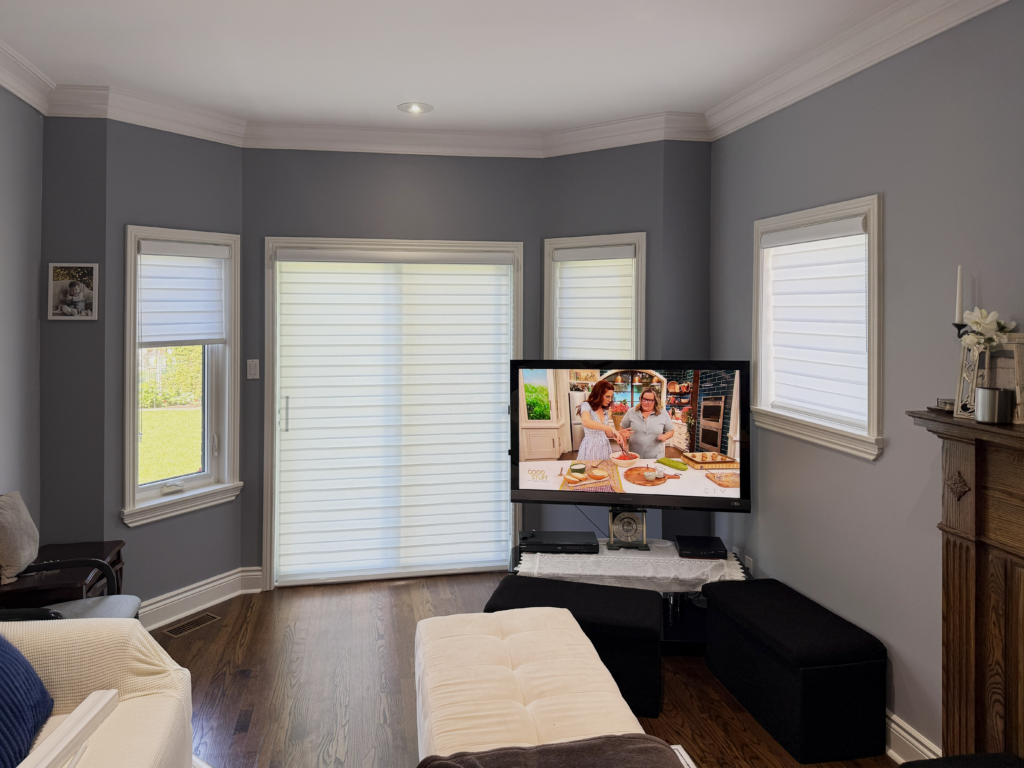
Do zebra blinds provide privacy?
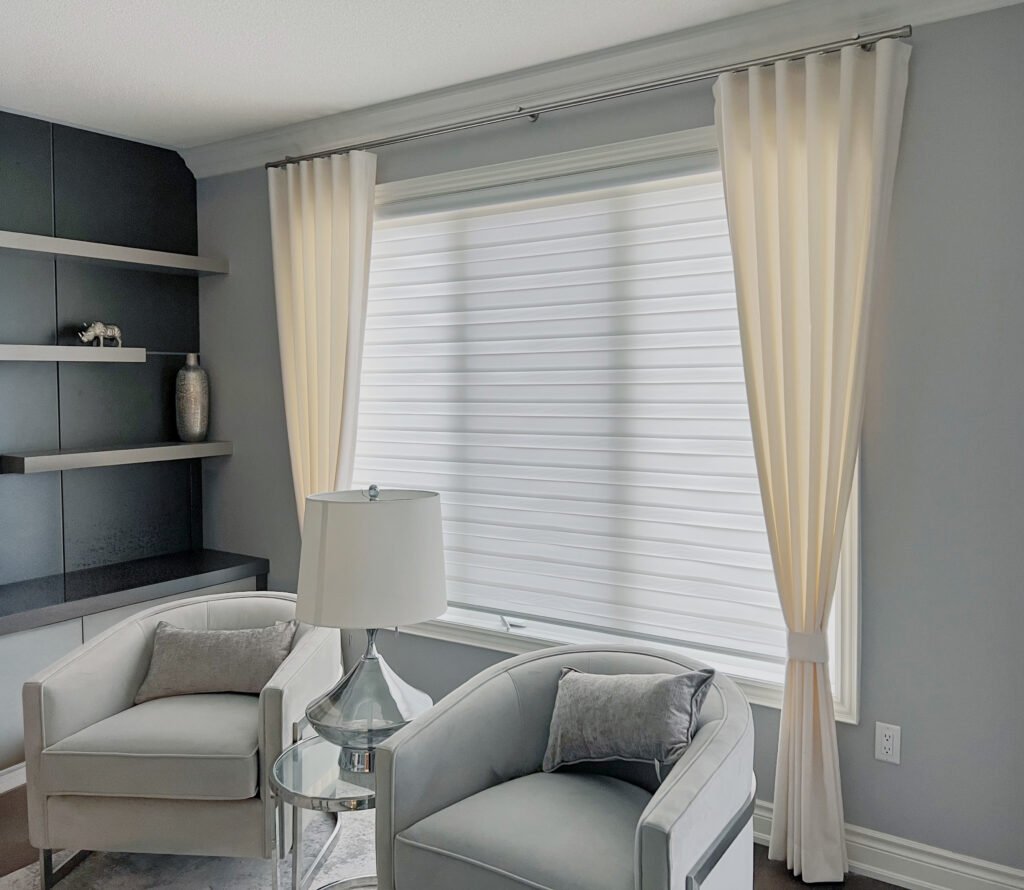
Yes — and this is where they earn their reputation. Zebra blinds are made of two layers of fabric, one sheer and one more opaque, mounted on a single roller. Slide the layers to align, and you get soft, filtered light with full privacy from the street. Slide them to offset, and you open the view while still softening direct sun. It’s the same window doing two different jobs depending on the hour — sheer for a bright morning kitchen, aligned for a private evening living room.
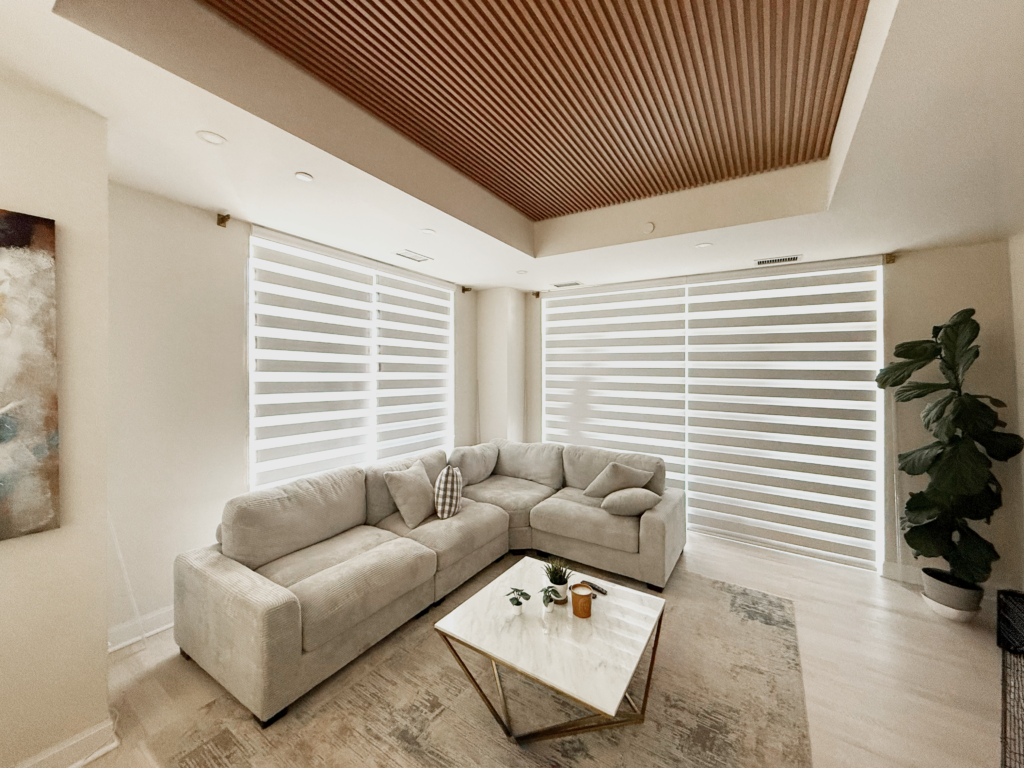
Are zebra blinds good for blackout?
On their own, standard zebra blinds diffuse light beautifully but aren’t a true blackout solution — even fully aligned, some light passes through the weave. For bedrooms where you want the room fully dark, we usually recommend a blackout-lined zebra fabric, or pairing zebra blinds with a blackout roller behind them for layered control. If blackout is the priority for a specific room, our black-out curtains are worth a look alongside zebra fabric for the rest of the home, so the whole space still feels consistent.
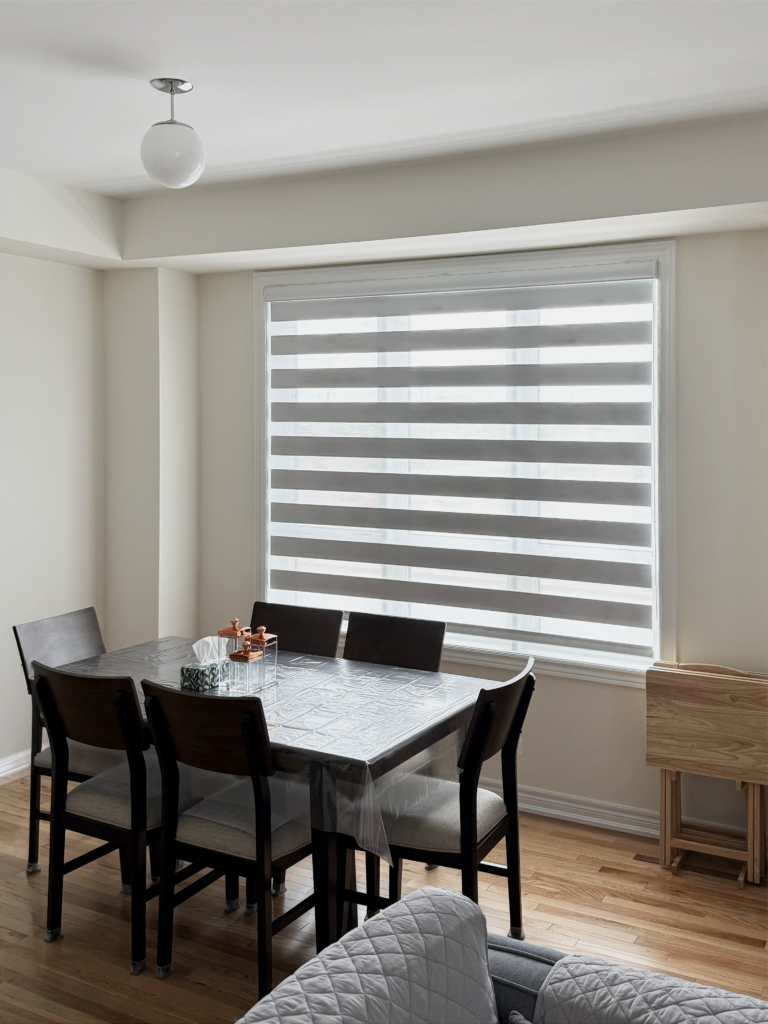
What are the disadvantages of zebra blinds?
We’d rather you hear this from us than find out after installation. Zebra blinds:
- Aren’t a full blackout product without a lining or backing layer (see above).
- Have a horizontal seam where the alternating bands meet, which is part of the design but worth seeing in person before you commit, especially on very large windows.
- Rely on a track and chain or motor mechanism, so fit and calibration matter — this is one reason we measure on-site rather than working from homeowner measurements alone.
None of these are dealbreakers for most homes. They’re simply the trade-offs, and knowing them upfront means no surprises later.
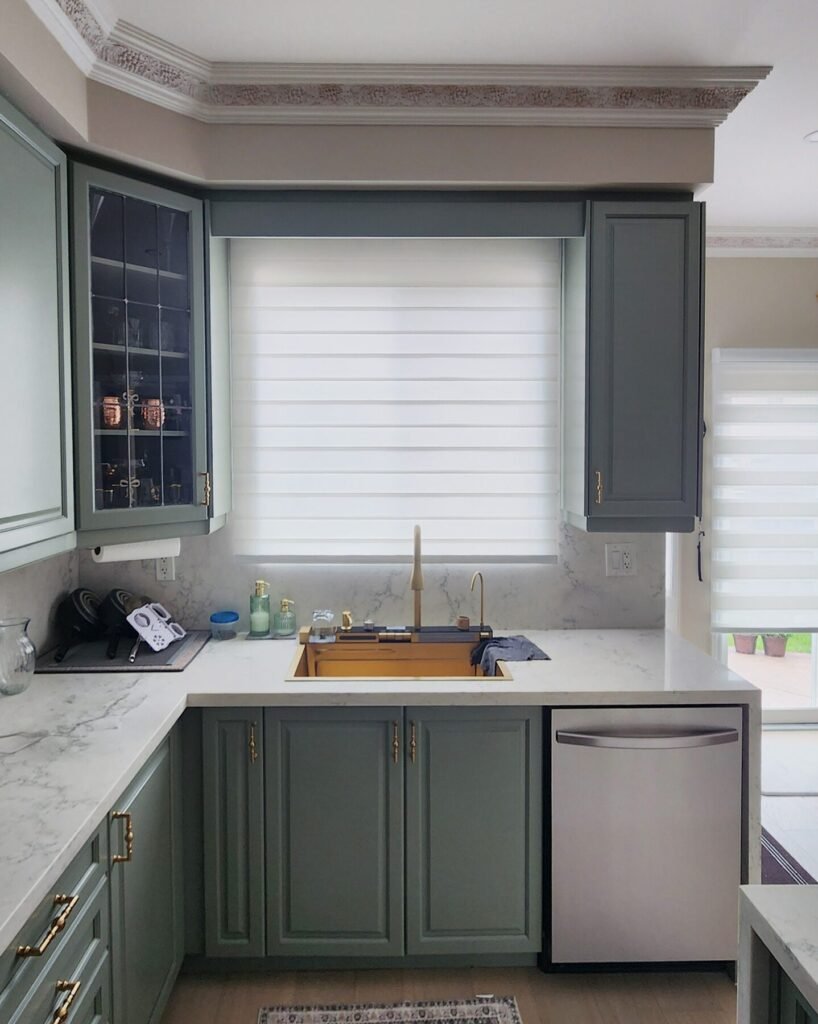
Do zebra blinds look cheap?
The fabric and finish make the difference here. Lower-grade zebra blinds can look flat or overly synthetic, which is likely where this question comes from. Well-made ones, in a linen-look or textured weave, read as considered and current rather than budget. We show fabric swatches in the room they’ll live in during your consultation, in real daylight, because zebra fabric can look completely different under a showroom light than it does in your own living room at 4pm.
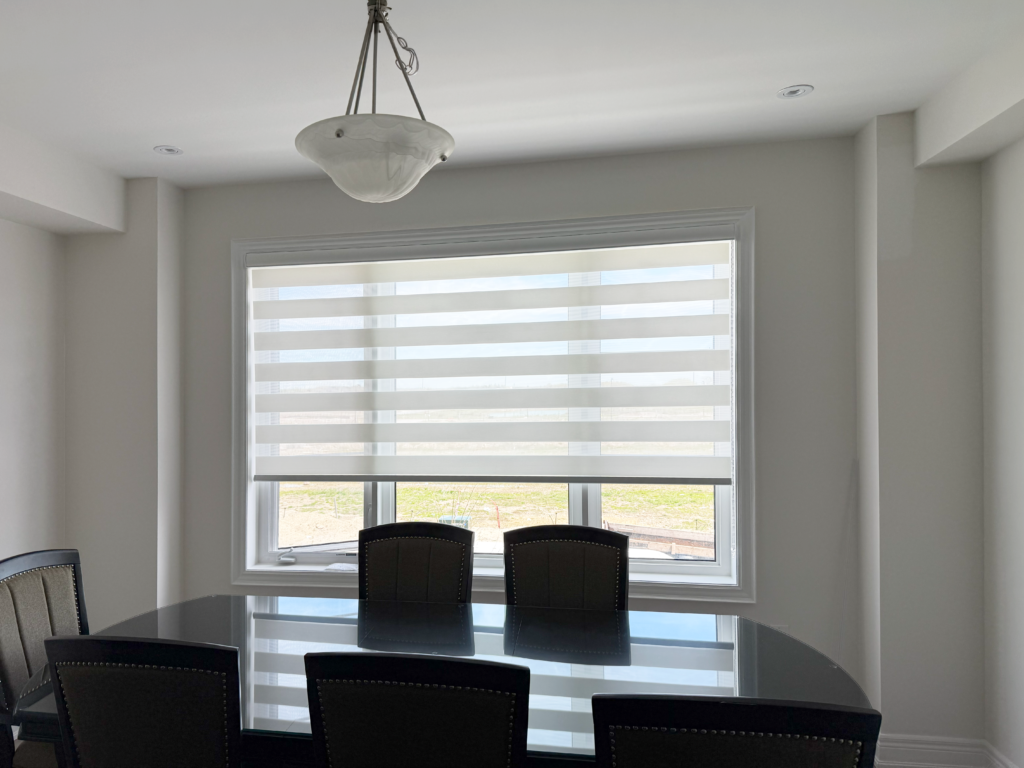
How do zebra blinds work?
Two fabric bands — sheer and semi-opaque — are stitched onto a single continuous loop and wound around one roller tube. Moving the chain or remote shifts the bands together or apart. Align the sheer sections with the opaque ones and light passes through evenly, softened. Offset them and you get more direct visibility and light, or move the whole shade up for a fully open window. It’s a simpler mechanism than it looks, which is part of why it’s held up well as a long-term choice rather than a trend.
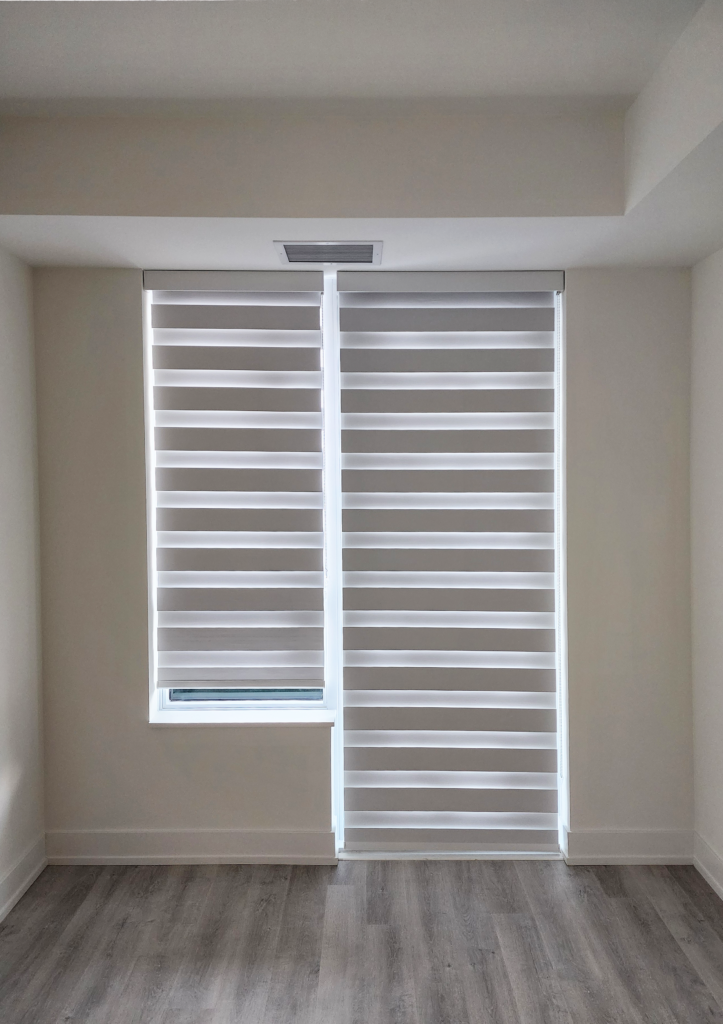
Are zebra blinds still in style?
They’ve moved from “trend” to “standard option” over the past few years, largely because they solve a real problem — most homeowners want light control that isn’t all-or-nothing, and zebra blinds do that better than a single-layer shade. Fabric colours and textures have also matured; today’s options lean toward warm neutrals and natural-looking weaves rather than the flatter, more graphic look of early zebra blinds. If you liked the idea years ago but weren’t sold on the look, it’s worth seeing the current fabric range.
Are zebra blinds good for bedrooms?
With the right fabric, yes — with two considerations. First, decide how dark you want the room (see the blackout note above). Second, think about the mechanism: a quiet motorized option is worth considering for a bedroom window you’ll adjust at night without fully waking up. We walk through both during an in-home consultation, since bedroom windows tend to have the most specific requirements of any room in the house.
Are zebra blinds easy to clean?
Day to day, a soft brush attachment or the dusting setting on a vacuum handles most upkeep, since the fabric attracts less dust than heavier drapery. For marks or spills, a slightly damp cloth on the affected area is usually enough — avoid soaking the fabric, since the banded seams are sewn rather than fused. If you’re prone to allergies or have pets, it’s worth mentioning at your consultation so we can point you toward the easiest-care fabric options.
Every one of these answers changes slightly depending on your windows, your light exposure, and how you actually use the room — which is exactly why we measure in person rather than guessing from a floor plan. If you’re weighing zebra blinds for your own home, book a free consultation and bring your questions; we’ll bring fabric samples and a tape measure.