
Window Coverings for a Whole Home: A Toronto Homeowner's Guide
Choosing window coverings for a whole house is not one decision — it's eight rooms with different light, privacy and daily-use needs. This guide walks through how to plan them together, room by room, so the finished home looks considered rather than assembled.
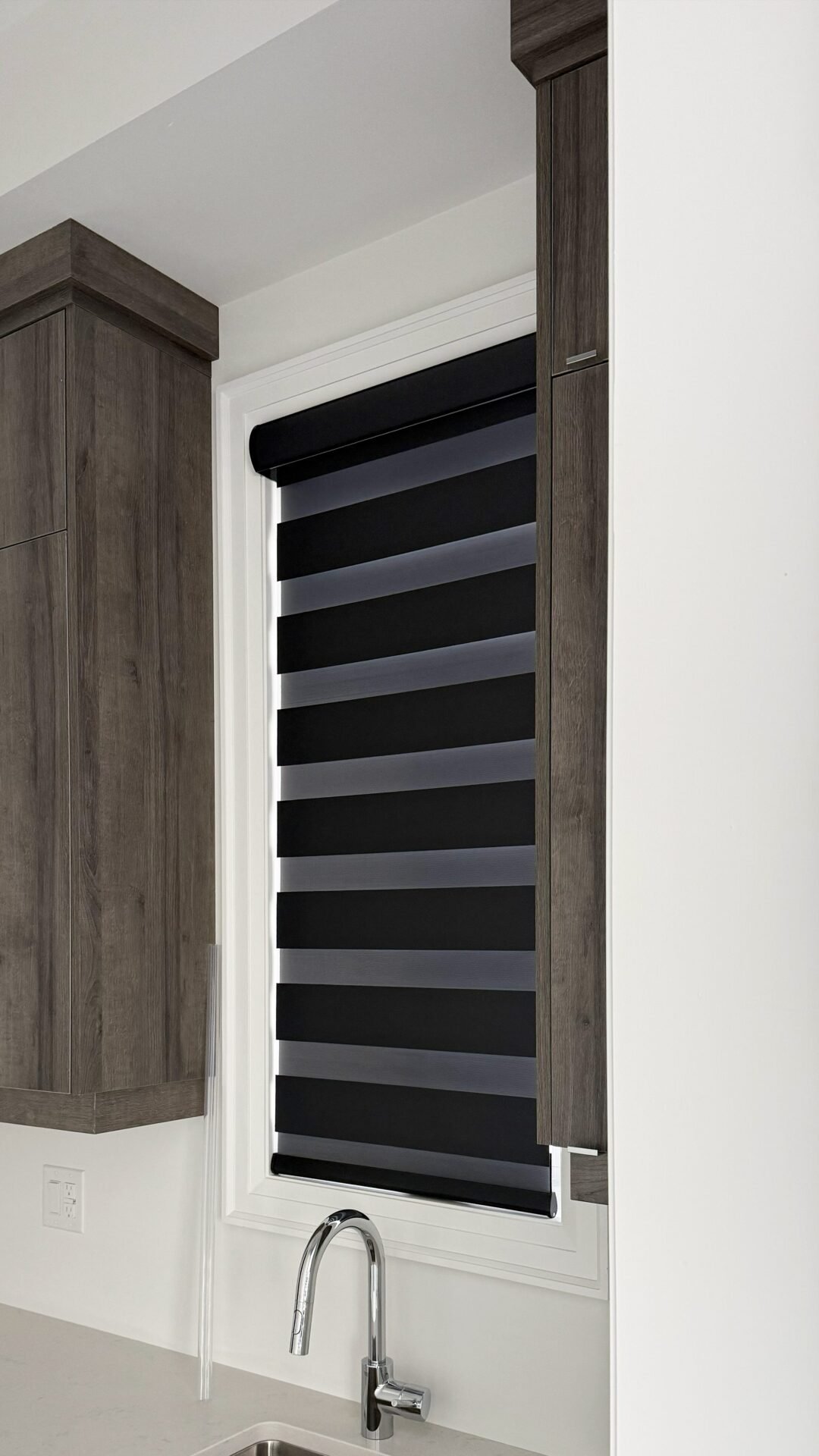
What "window coverings" actually covers
Window coverings — also called window treatments — is the umbrella term for everything you put on a window: curtains and drapery, blinds and shades, shutters, and the motorization that moves them. Each family solves a different problem, which is why most homes end up using more than one.
Curtains and drapery add softness, scale and warmth, and they are what tall windows and high ceilings usually want. Blinds and shades — roller, zebra, solar, cellular, Roman — are the everyday workhorses for light and privacy control. Shutters give a room an architectural, built-in look and handle moisture and daily handling well. Motorization is not a fifth product but a way of operating the other three, and it earns its place on glass you cannot comfortably reach.
Toronto adds its own variety. A glass condo in CityPlace, a Victorian semi in Cabbagetown, a new build in Markham with builder-grade openings, a wide bay in a midtown family home — each asks for something different, and almost none of them fit an off-the-shelf blind. The rest of this guide is the decision path we walk with homeowners: what the room needs first, the product second.
On this page
- The four types of window covering
- How to choose: light, privacy, insulation, use
- Best window coverings by room
- What each product is good at
- Should every room match?
- Planning a whole house, step by step
- Toronto condos & floor-to-ceiling glass
- Around the GTA: what actually comes up
- Motorized & smart window coverings
- Custom or ready-made?
- Frequently asked questions
- Every guide, by topic
Four ways to dress a window
Every product below is custom-measured and manufactured — nothing off the shelf, nothing forced to fit. Follow any of them for the full detail on that category.
Blinds & Shades
Roller, zebra, cellular, Roman and sheer options — our most-requested choice for Toronto condos and kitchens alike.
Custom blinds & shades in Toronto →Motorization
Somfy-powered, Control4-ready automation — ideal for the floor-to-ceiling and hard-to-reach glass of a downtown tower.
Motorized blinds in Toronto →California Shutters
Plantation-style solid louvre panels that give Toronto living rooms, bays and heritage homes a finished, architectural look.
California shutters in Toronto →Drapes & Curtains
Custom-cut from a curated fabric library — soft layers that warm a high-ceilinged condo or a grand midtown room.
Custom drapes & curtains in Toronto →Start with the room, not the product
Most people begin by asking "should I get blinds or curtains?" That question has no answer on its own. These four do.
How much light do you want?
Fabrics sit on a scale. Sheer softens light and keeps the view. Light-filtering glows without letting you see through. Room-darkening takes most of it. Blackout takes nearly all of it, and a lined drapery panel takes the last of it around the edges.
Solar shades are their own answer: an open-weave fabric rated by openness percentage, which cuts glare and heat while you can still see out. On a south or west window that gets hard afternoon sun, that is usually the right starting point.
How much privacy, and when?
Daytime and night-time privacy are different problems, and this is where homeowners are most often surprised. A zebra or sheer shade that feels perfectly private at noon becomes see-through after dark, when the light is inside rather than outside.
If a room is used in the evening and faces a neighbour, plan for a second layer — a blackout roller behind drapery, or shutters that close properly. Bedrooms and ground-floor rooms in dense semi-detached streets are the usual candidates.
Does the window need insulation?
Cellular, or honeycomb, shades trap air in their cells and are the strongest insulator of the fabric options — worth considering on older windows and on any room that runs cold in a Toronto February.
Lined drapery does similar work more decoratively, particularly floor-length panels that seal the gap between fabric and floor. Shutters help too, through the solid panel itself.
How often will you use it?
A window you open and close twice a day deserves a different mechanism from one you adjust twice a year. Patio doors and heavily used kitchen windows want something that operates easily hundreds of times without fuss.
Windows above a stairwell, over a kitchen sink, or two storeys up in a condo are the honest case for motorization — not because it is clever, but because otherwise those blinds simply never get used.
Best window coverings by room
What each room is actually asking for, and the combination that usually answers it.
Living room
The room with the most competing demands: glare on the television, a view worth keeping, and the need to look finished when guests are over. Layering earns its keep here more than anywhere.
Usual answer: solar or roller shades for daytime glare, with sheer or lined drapery panels for scale and warmth. Shutters instead, if the architecture calls for something built-in.
Primary bedroom
Sleep is the brief. Aim for genuine darkness, and remember that light leaks around the edges of a shade, not through it — which is why a shade alone rarely gets a bedroom fully dark.
Usual answer: blackout roller or cellular shade, plus floor-length lined drapery to close the side gaps. Motorize it if the window is behind the bed.
Children's bedroom
Darkness for daytime naps, and cordless operation for safety — corded blinds are a real hazard in a room a small child uses unsupervised.
Usual answer: cordless blackout cellular or roller shades. Motorized if the budget stretches, since there is then no cord at all.
Kitchen
Steam, cooking grease and constant handling. Fabric that cannot be wiped ages badly here, and long drapery near a range is a genuinely bad idea.
Usual answer: easy-clean roller shades, faux-wood blinds, or shutters. Keep it short and above the counter line.
Bathroom
Constant moisture plus the highest privacy requirement in the house, often on the smallest window.
Usual answer: vinyl or composite shutters, or a moisture-tolerant roller. Avoid natural wood and unlined fabric.
Dining room
Used mostly in the evening and mostly for how it looks. Design leads, light control follows.
Usual answer: drapery, on its own or over a simple roller shade for the daytime.
Home office
Screen glare is the whole problem, and it moves across the day. Full blackout makes a room you cannot work in.
Usual answer: solar shades at 3–5% openness, which cut glare and keep the daylight.
Basement
Small, high windows with little natural light to spare, and often a damp-prone room. The goal is privacy without making it darker.
Usual answer: light-filtering cellular shades — privacy plus insulation, without taking the little daylight there is.
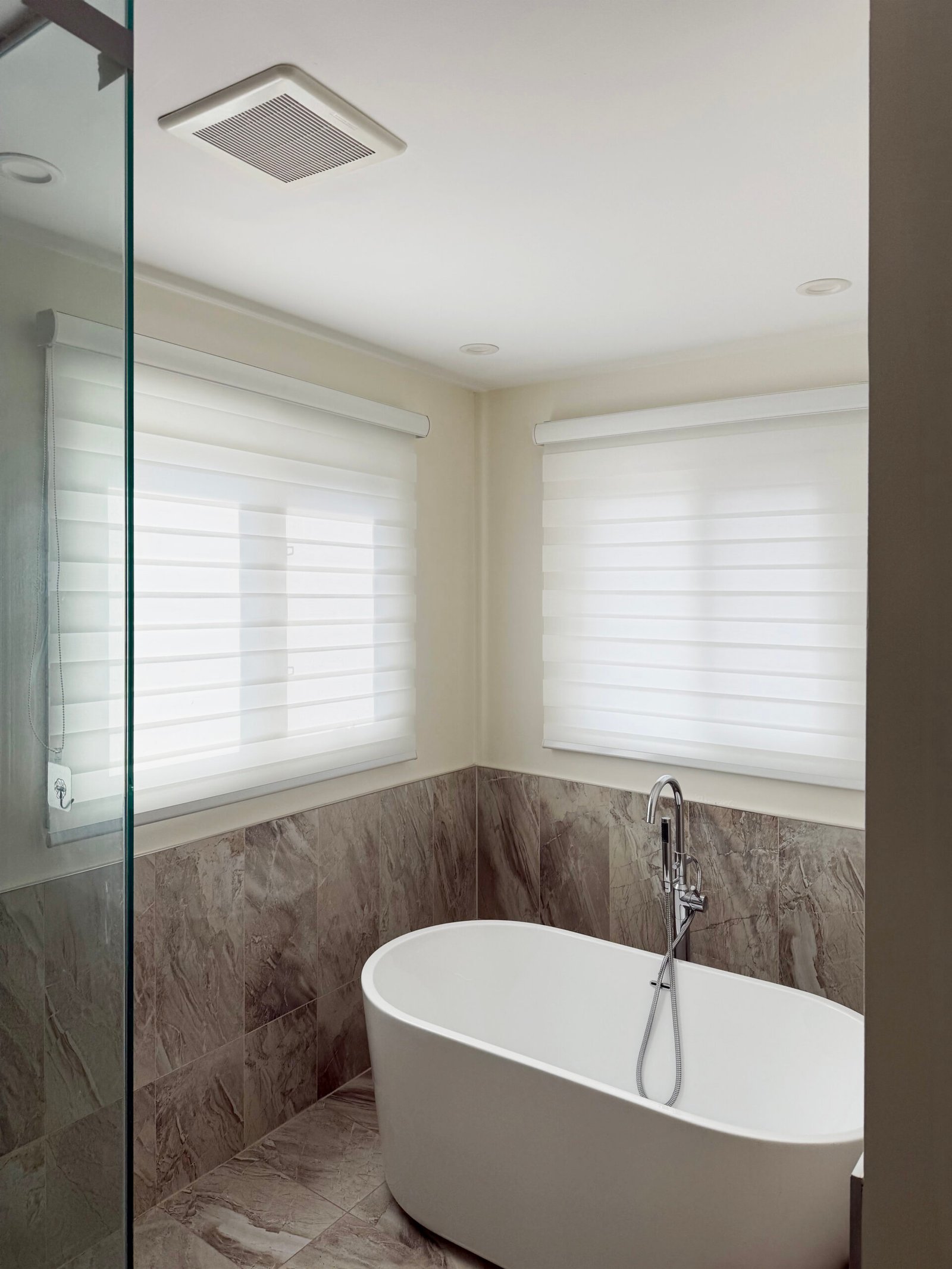
Curtains, blinds or shutters — what each one is good at
No product wins everything. Here is the honest one-card summary of each, and where it belongs.
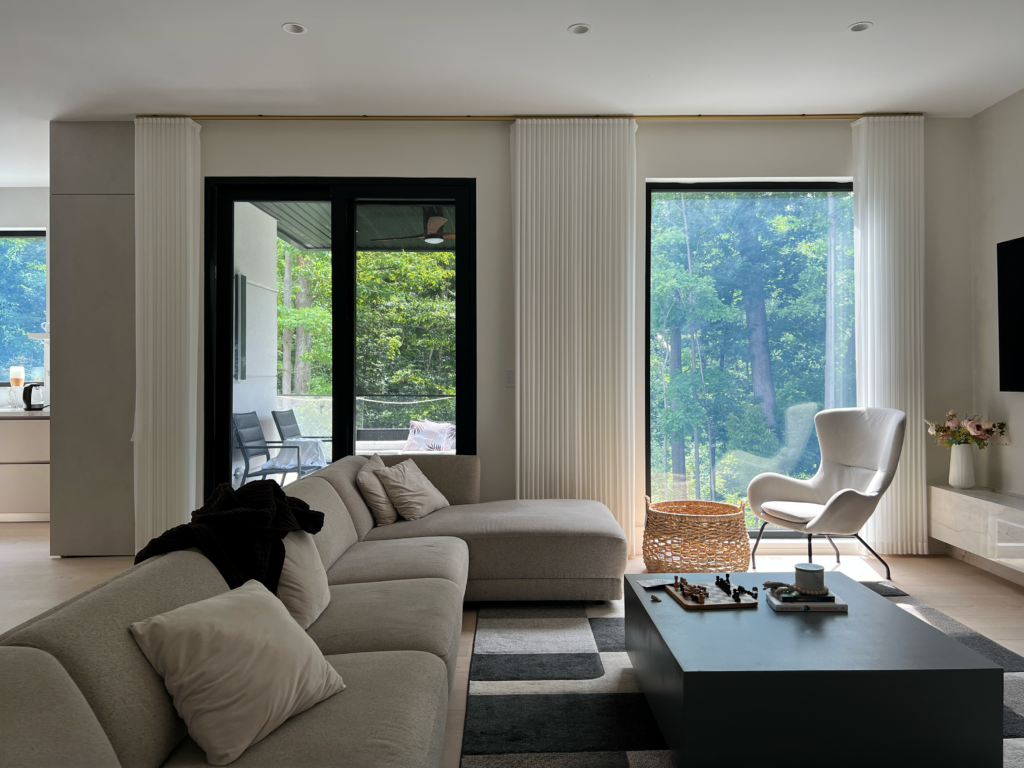
Curtains & drapery
- Best at
- Scale, softness and warmth. Lined and floor-length, they also insulate and absorb sound.
- Trade-off
- Little daytime privacy unless drawn, and they need occasional cleaning.
- Usually goes in
- Living rooms, dining rooms, bedrooms as a second layer, and anywhere with high ceilings.
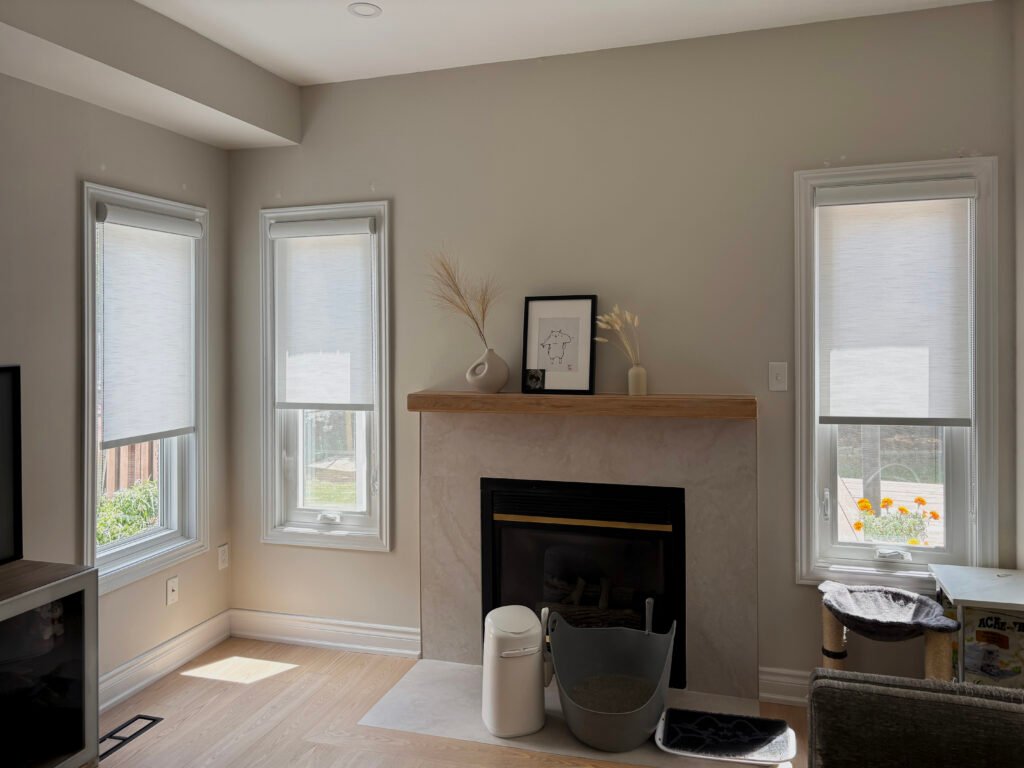
Roller shades
- Best at
- Clean, quiet light control — the fabric you choose decides everything from sheer to full blackout.
- Trade-off
- Very little insulation on their own.
- Usually goes in
- Condos, kitchens, bedrooms in blackout, and under drapery as the working layer.
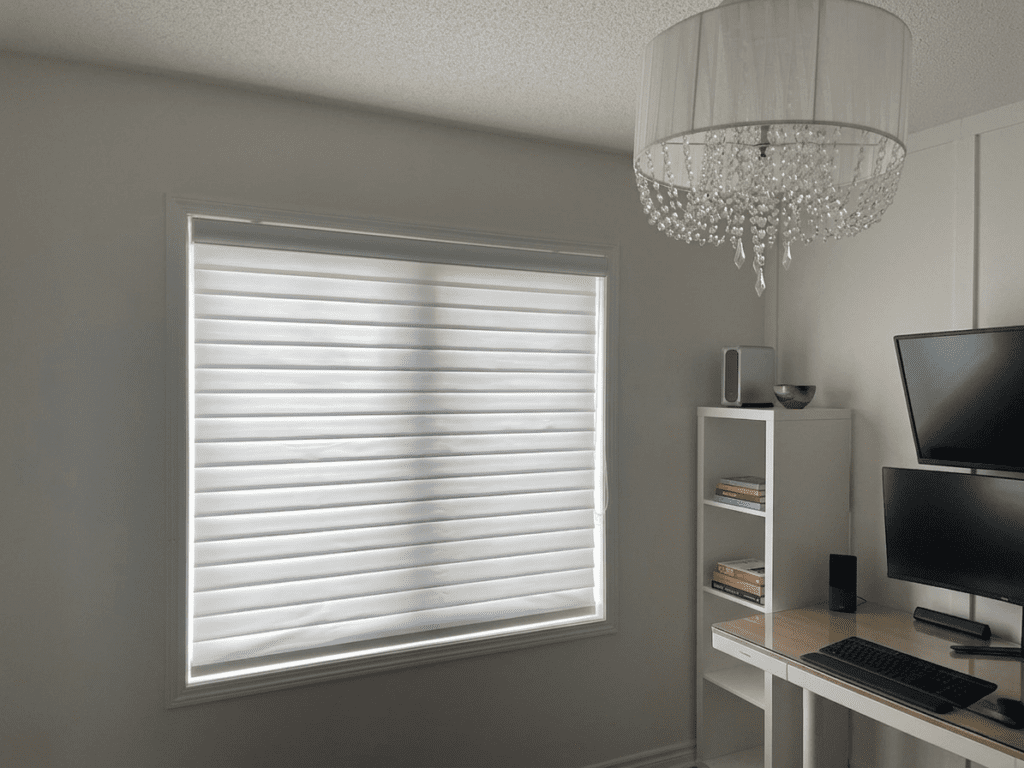
Zebra shades
- Best at
- Shifting between view and privacy by sliding the bands — modern, light and easy to live with.
- Trade-off
- Not private after dark. If the room is used in the evening, plan a second layer.
- Usually goes in
- Condos, living rooms, dining rooms, and daytime spaces generally.
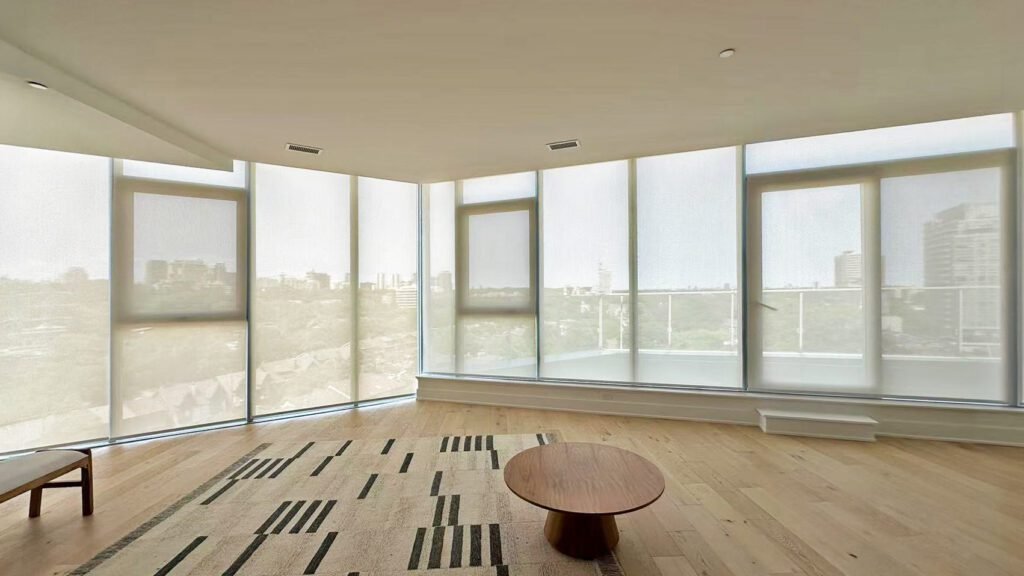
Solar shades
- Best at
- Glare and heat on sun-facing glass, while you keep the view. Rated by openness — a lower percentage blocks more.
- Trade-off
- You can see out, so at night people can see in. Never the only layer in a bedroom.
- Usually goes in
- South and west windows, home offices, and walls of condo glass.
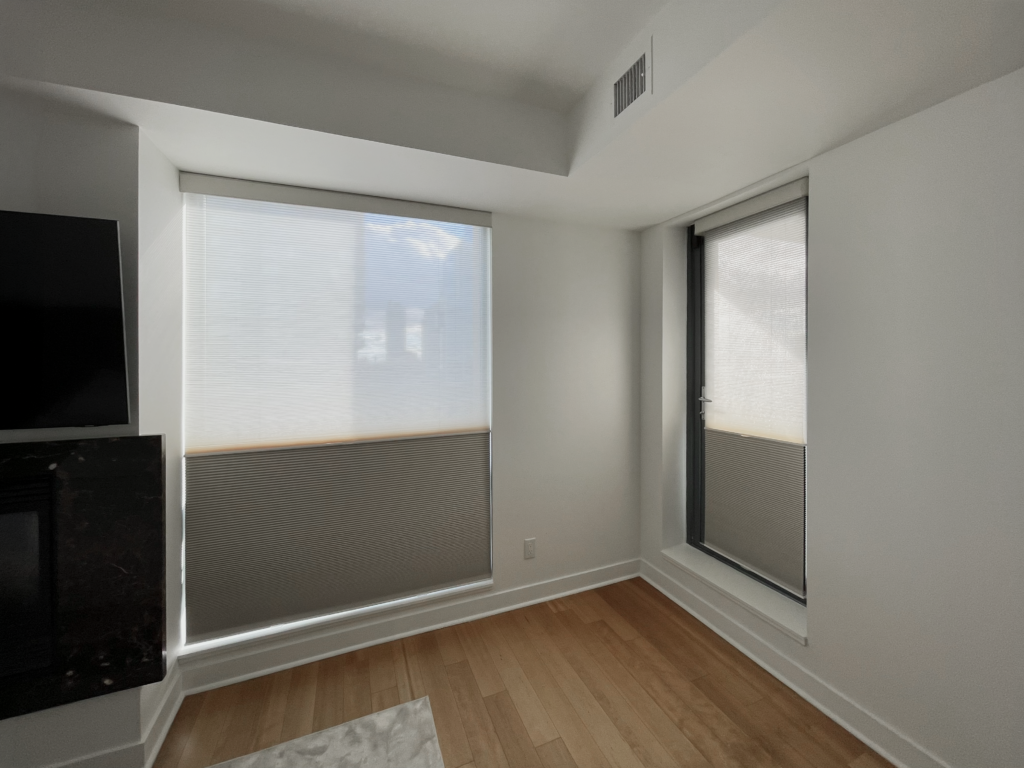
Cellular / honeycomb shades
- Best at
- Insulation — the air trapped in the cells makes these the warmest of the fabric options.
- Trade-off
- Understated by design; they will not be the feature of a room.
- Usually goes in
- Cold rooms, older windows, basements, and bedrooms in a blackout cell.
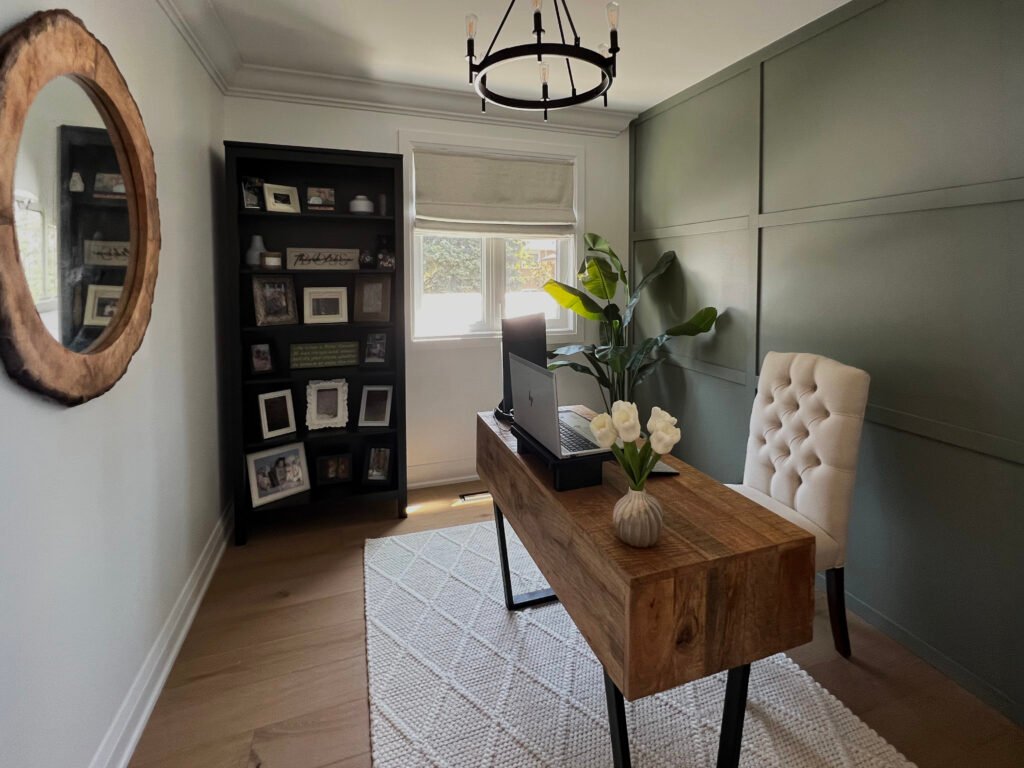
Roman shades
- Best at
- A soft, tailored look with the neatness of a shade — fabric folds rather than a flat panel.
- Trade-off
- Less suited to very wide openings, and fabric needs occasional care.
- Usually goes in
- Bedrooms, dining rooms, and anywhere you want drapery's feel without the length.
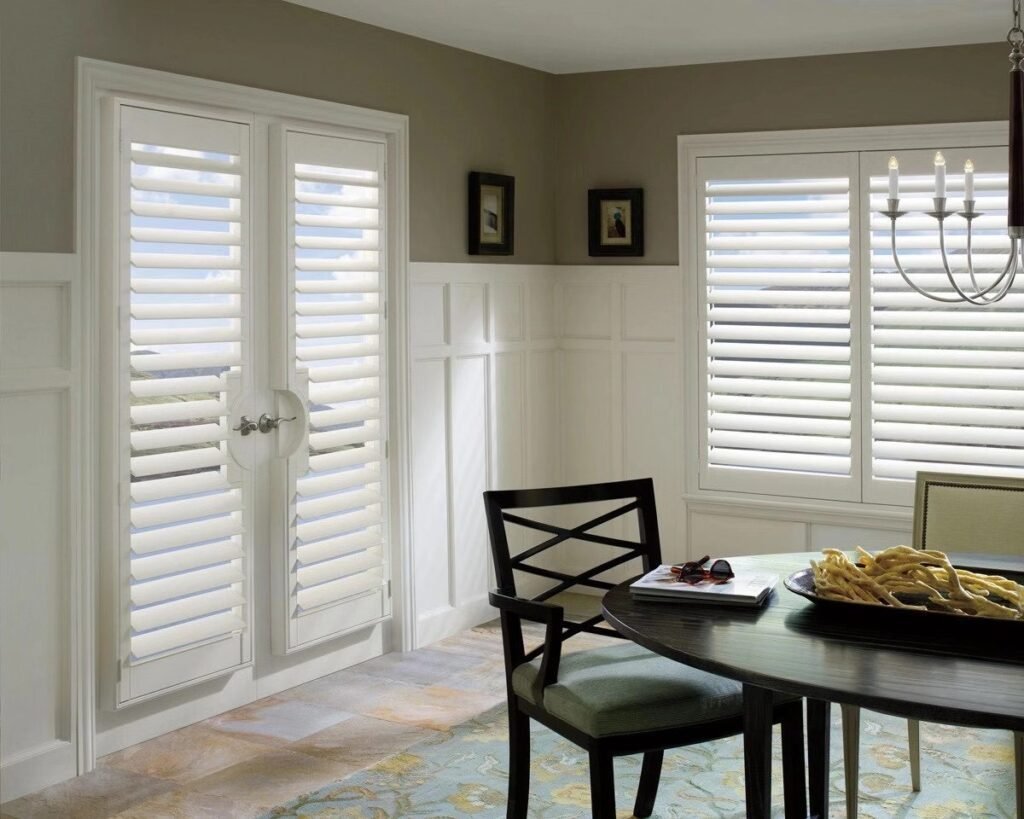
Shutters
- Best at
- Privacy and precise light control by tilting the louvres, plus a built-in architectural look. Very durable and wipe-clean.
- Trade-off
- A permanent fixture rather than something you swap out, and the highest upfront cost per window.
- Usually goes in
- Front elevations, bathrooms, bay windows and character homes.
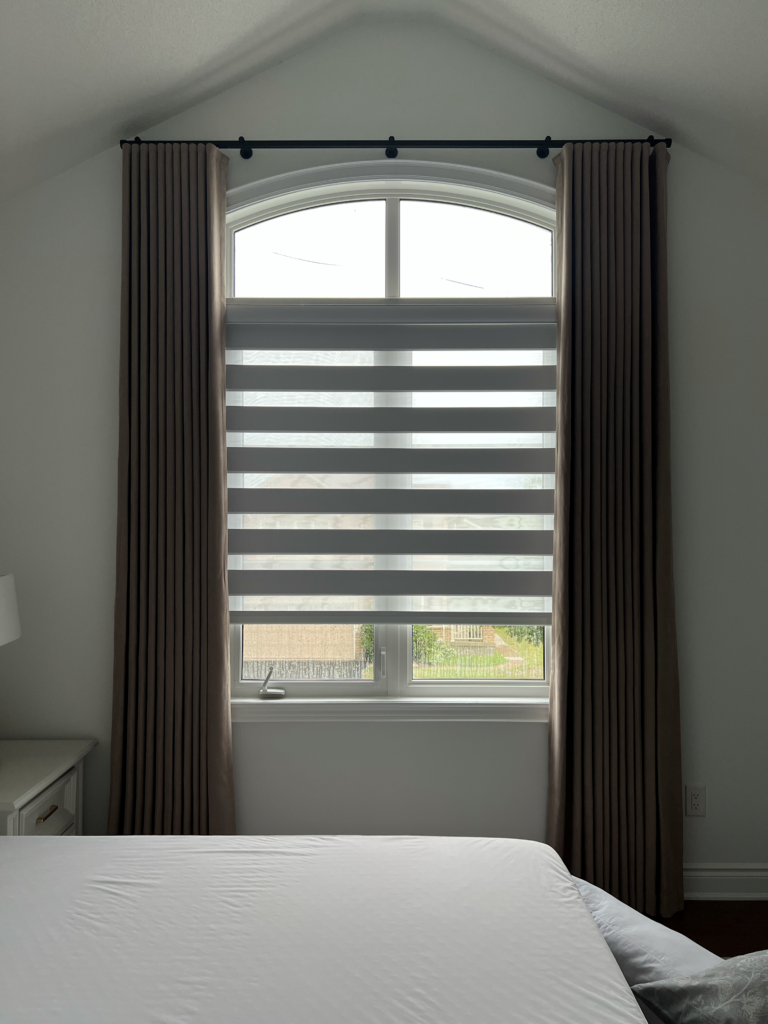
Layered combinations
- Best at
- Everything, because each layer covers the other's weakness — a shade for the day, drapery for the night and the look.
- Trade-off
- Two things to buy and two things to look after.
- Usually goes in
- Primary bedrooms and living rooms — the rooms that have to work in daylight and after dark.
There is no universal winner here. The best solution depends on the room and on what you need that particular window to do — which is why most homes end up using three or four of these rather than one.
Should every room have the same window covering?
No — and the homes that look best rarely do.
Whole-home window treatment does not mean the same product on every window. It means one plan, made once, so that different products in different rooms still read as one house. Here is how a typical Toronto family home resolves:
- Living room — sheer curtains layered over roller shades
- Primary bedroom — blackout shades with lined drapery over them
- Kitchen — easy-clean roller shades, nothing that traps grease
- Bathroom — moisture-resistant shutters
- Stairwell and high windows — motorized shades, because otherwise they never move
- Front elevation — shutters, so the house presents consistently from the street
Six different answers, one coherent home. Two things make a mixed house look deliberate rather than random, and both are decided at planning time rather than fixed afterwards:
One colour temperature across the house. Whites are not one colour — a warm white shade beside a cool white shutter reads as a mistake even when each is lovely on its own. Choose the temperature first and hold it everywhere.
Consistent hardware and mount depth. Inside-mount in one room and outside-mount in the next, or three different headrail profiles across one floor, is what makes a home feel assembled piece by piece. Deciding it once, up front, costs nothing.
This is also the practical argument for doing a whole home in one project rather than a window at a time: fabrics get discontinued, dye lots shift, and the shade you loved two years ago may no longer be available to match.
How to plan window coverings for a whole house
The order matters. Most of the expensive mistakes come from choosing fabric before deciding function.
- Walk every room and write down what it needs. Light, privacy, insulation, how often the window is used. One line per room is enough.
- Set the light and privacy level per room before looking at a single product. Bedrooms and bathrooms first — they are the least flexible.
- Identify the special windows. Skylights, arches, floor-to-ceiling glass, patio doors, anything above reach. These drive the budget and the lead time, so find them early.
- Decide where consistency matters. Usually: the front elevation, and any rooms visible from each other in an open-concept main floor.
- Choose the colour temperature and fabric family for the whole house, then let individual rooms vary within it.
- Decide which windows get motorized. Hard-to-reach first, then bedrooms, then the rest if the budget allows. Motorization is far easier to plan in than to retrofit.
- Measure every opening properly. Each window is measured in three places for width and three for height, because almost no opening is truly square.
- See the samples in your own light. A fabric in a showroom and the same fabric in your north-facing bedroom are not the same colour. This is the step people skip and later regret.
- Sequence the installation around the rest of the work. Window coverings go in after painting and flooring, and before you move furniture back.
Toronto condos and floor-to-ceiling glass
The most common whole-home project we do downtown, and the one with the most rules attached.
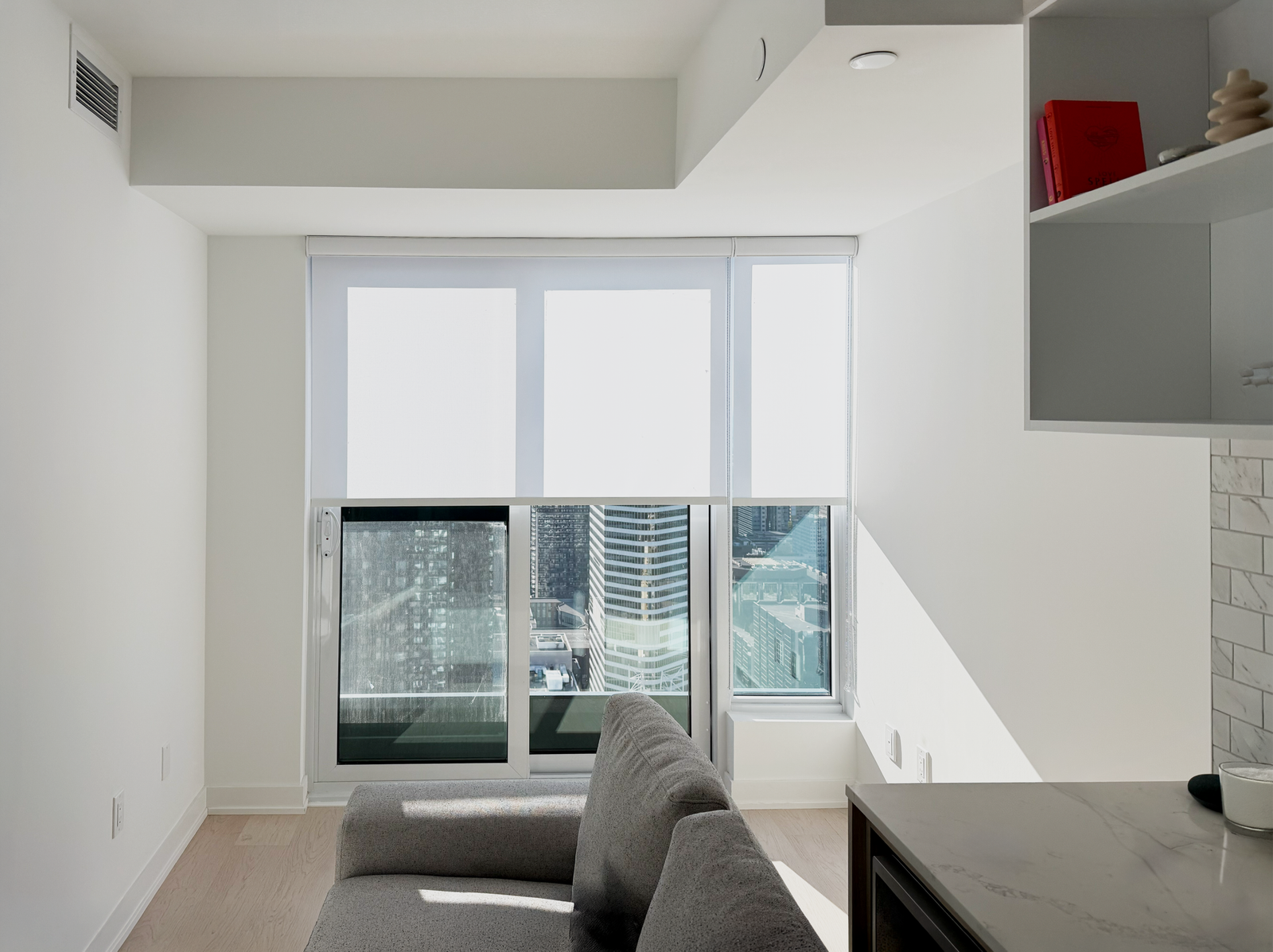
A downtown condo is not a small house. The glass runs floor to ceiling, there is often no window frame to mount into, the sun arrives without a single tree to soften it, and the building has its own opinion about what the exterior may look like.
Check your condo rules before choosing anything. Many of the Toronto buildings we work in specify that whatever faces the street must read white or off-white from outside. That is usually solved with a white backing rather than by changing the fabric you actually want inside — but it has to be known before the order, not after.
The three problems that come up in nearly every downtown suite: glare on screens and floors, which solar shades handle without taking the view; heat on a west-facing wall of glass, where fabric openness matters more than colour; and night-time privacy, since a sheer or zebra shade that feels private by day is transparent once the lights are on inside.
Ceiling tracks and recessed pockets are worth asking about if you are still at the pre-construction or renovation stage — a shade that disappears into the ceiling is far cleaner than one bracketed onto the glass wall.
For the blind-by-blind detail, our guide to the best blinds for Toronto condos goes deeper, and the first thing to do in a new pre-construction condo covers the timing.
Motorized and smart window coverings
Worth it on some windows, unnecessary on others. Here is where the line usually falls.
Motorization is a way of operating blinds, shades, shutters or drapery — not a separate product. We work with Somfy, Neo and A-OK systems, and Somfy integrates with Control4 for homes already running whole-house automation.
Where it clearly earns its cost: windows above a stairwell or over a kitchen sink, two-storey glass, skylights, anything behind furniture, and any window in a home where reaching up is difficult. The honest test is simple — if a manual blind in that spot would never get adjusted, motorizing it is the difference between having a window covering and having decoration.
Where it is a preference rather than a need: ordinary reachable windows. It is lovely to have, and scheduling shades to close at sunset is genuinely pleasant, but it is a comfort upgrade rather than a fix.
Schedules, sun sensors and voice or app control all follow once the motors are in. The decision that matters is which windows get them, and it is far cheaper to make that decision before installation than after.
Costs and options are broken down in our motorized blinds cost guide.
When custom is worth it — and when it isn't
An honest answer, including the case against.
Ready-made is fine when the window is a standard size, the room is low-stakes, and you may change your mind in a year. A spare bedroom, a rental, a basement window — there is no reason to spend more.
Custom earns its cost when fit matters. Windows are rarely square; a made-to-measure shade is cut to the actual millimetre of your opening, which is why it sits flush and does not leak light down the sides. On a bedroom, that difference is the whole point.
It matters more on anything unusual — oversized glass, arches, angled and skylight openings, patio doors, bay windows. Ready-made simply does not exist in those shapes, and forcing a standard size to fit is where homes end up with the gaps and awkward brackets everyone notices.
The other custom-only advantage is consistency. Across a whole house, made-to-measure lets one fabric, one colour temperature and one hardware profile run through every room, at any size. Off the shelf, you are choosing from whatever each size happens to be offered in.
The trade-offs are real: a two-to-three week lead time rather than same-day, and a higher price per window — though buying factory-direct narrows that gap more than most people expect. Our comparison of custom drapes versus ready-made curtains works through the drapery side in detail.
Toronto and GTA homes: what actually comes up
The same handful of situations account for most of the whole-home projects we quote.
New builds in Markham, Richmond Hill and Vaughan. Builder-grade openings are usually consistent in size, which makes a whole-home plan straightforward — but they often arrive with no coverings at all and a lot of glass at the back of the house. Start with the bedrooms and the west-facing rooms; the rest can follow.
Large detached homes in Oakville and Forest Hill. Tall windows, formal front rooms and a real need for the front elevation to look consistent from the street. Shutters at the front, drapery in the principal rooms, and lakefront exposure to plan around if the house faces the water.
Open-concept main floors. Kitchen, dining and living windows all visible at once, which is a consistency problem before it is a product problem.
Wide patio and sliding doors. A door is used daily, so the mechanism matters more than the fabric — see what works on blinds for sliding and patio doors.
South and west-facing walls of glass. Heat and glare rather than privacy. Solar and roller shades first, cellular shades where the room also runs cold.
Privacy in dense semi-detached streets. Ground-floor front rooms overlooked from the sidewalk, where zebra blinds work by day but need a second layer for the evening — usually blackout curtains or sheer drapery over a shade.
Windows that are not a rectangle. Arches, angled and skylight openings, transoms and bays — covered in our guides to skylight blinds and special window types. Find these early; they set the lead time.
Across Toronto we work through Old Toronto and the downtown core, the Distillery District, CityPlace and the waterfront, midtown, the east end — Leslieville, Riverdale and the Beaches — the west end around High Park, Roncesvalles and Bloor West, plus North York, Scarborough and East York. For softer, tailored options at any of them, see Roman shades.
Toronto neighbourhoods we work in
From glass towers to century homes, we know Toronto's neighbourhoods and the window challenges each one brings.
Old Toronto & Distillery District
The heart of the city — heritage lofts, converted industrial glass, and modern condos steps from the lake. We do it all, from blackout rollers to tailored drapery.
Downtown & CityPlace
Floor-to-ceiling condo glass where privacy and glare are the whole challenge. Motorized solar rollers by day, blackout in the bedroom by night.
King West & Liberty Village
Open lofts and converted warehouses with big industrial windows — clean roller and zebra blinds keep the lines crisp.
The Annex & Cabbagetown
Victorian and Edwardian homes with bay and tall sash windows. We favour shutters and tailored drapery that suit the architecture.
Leslieville & Riverdale
Semis and townhomes with bay windows — a sweet spot for layered blinds with a little drapery for warmth.
Forest Hill & Lawrence Park
Large established homes where drapery, shutters and quiet motorization come together for a finished look.
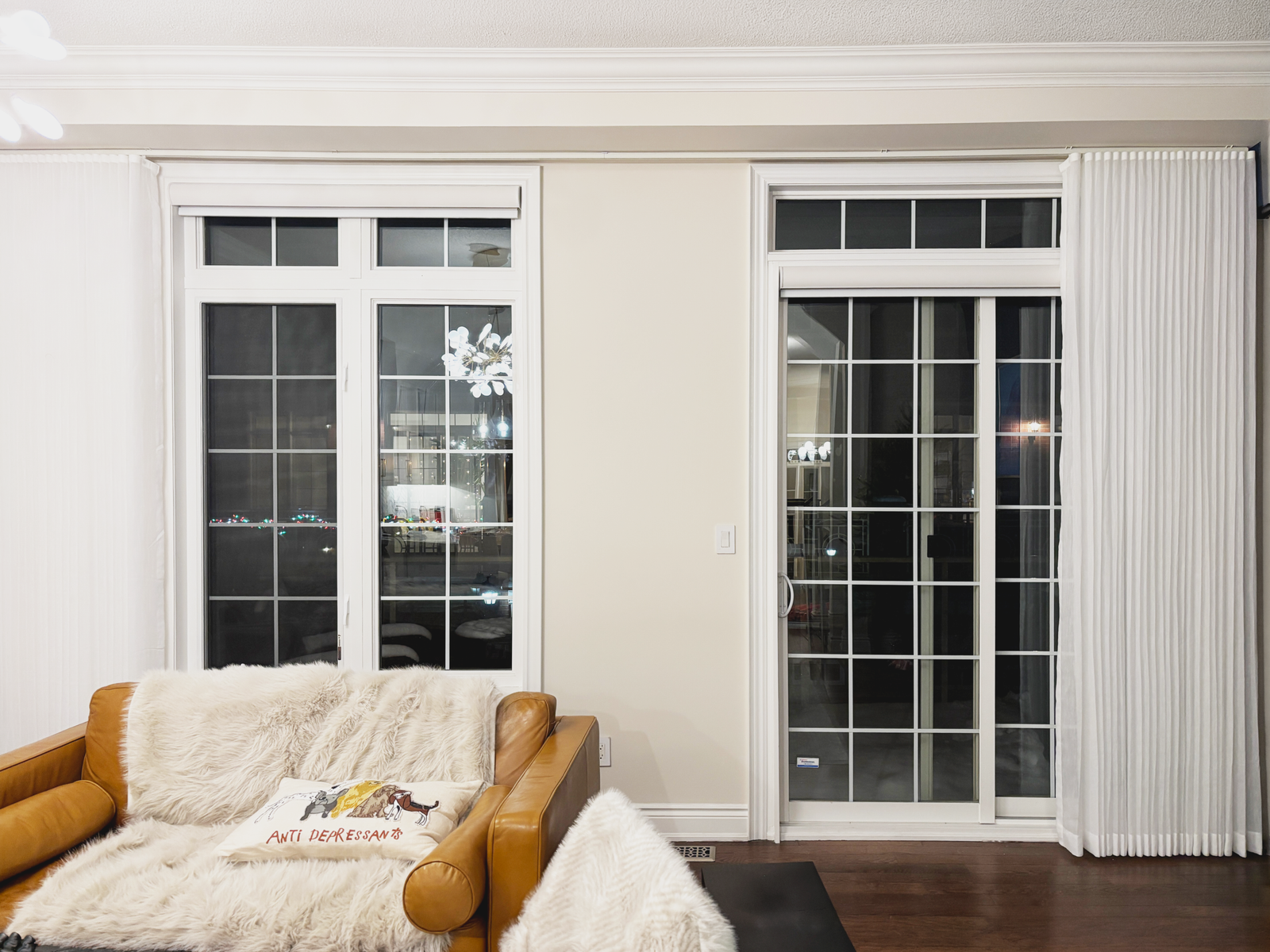
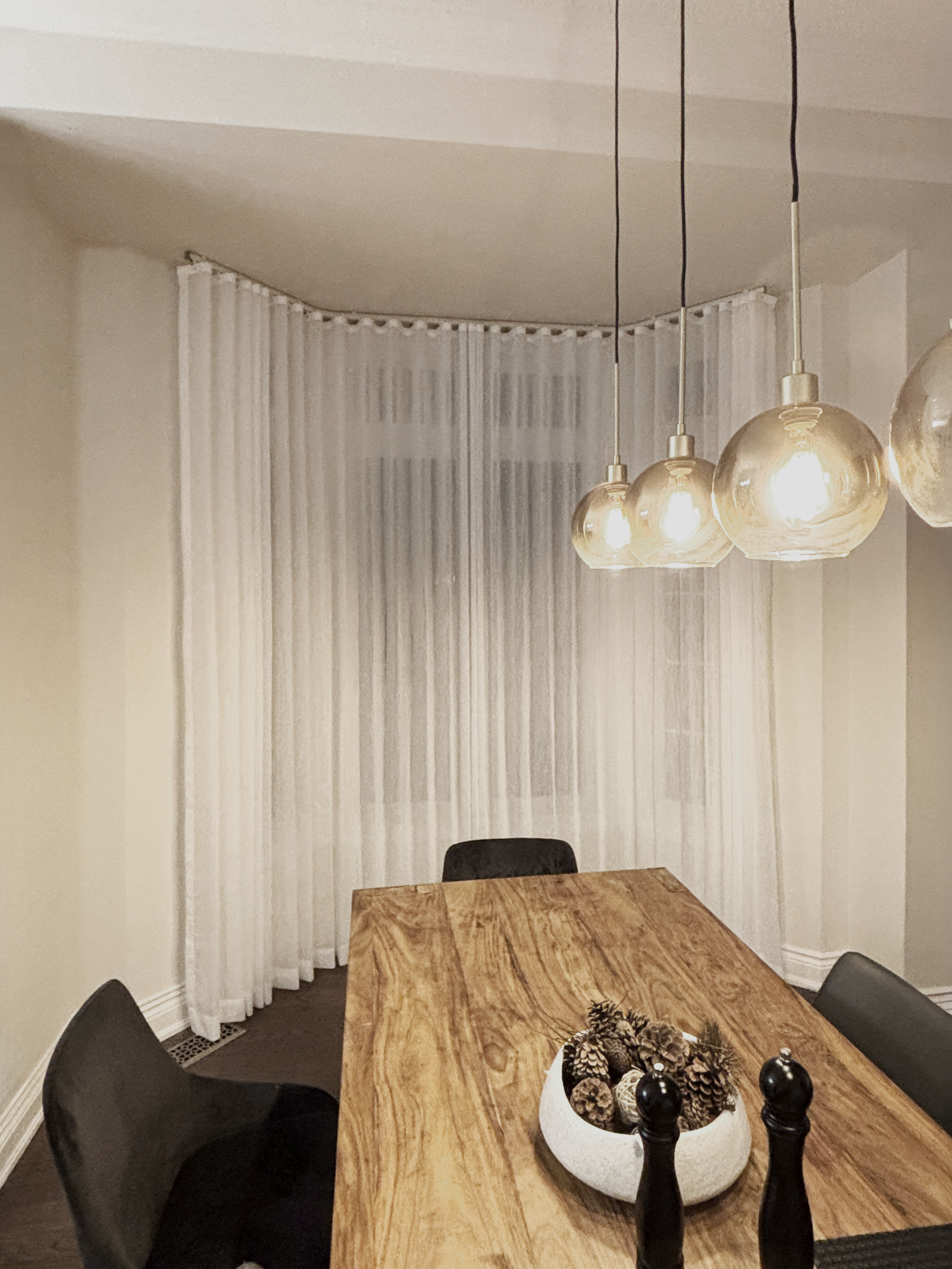
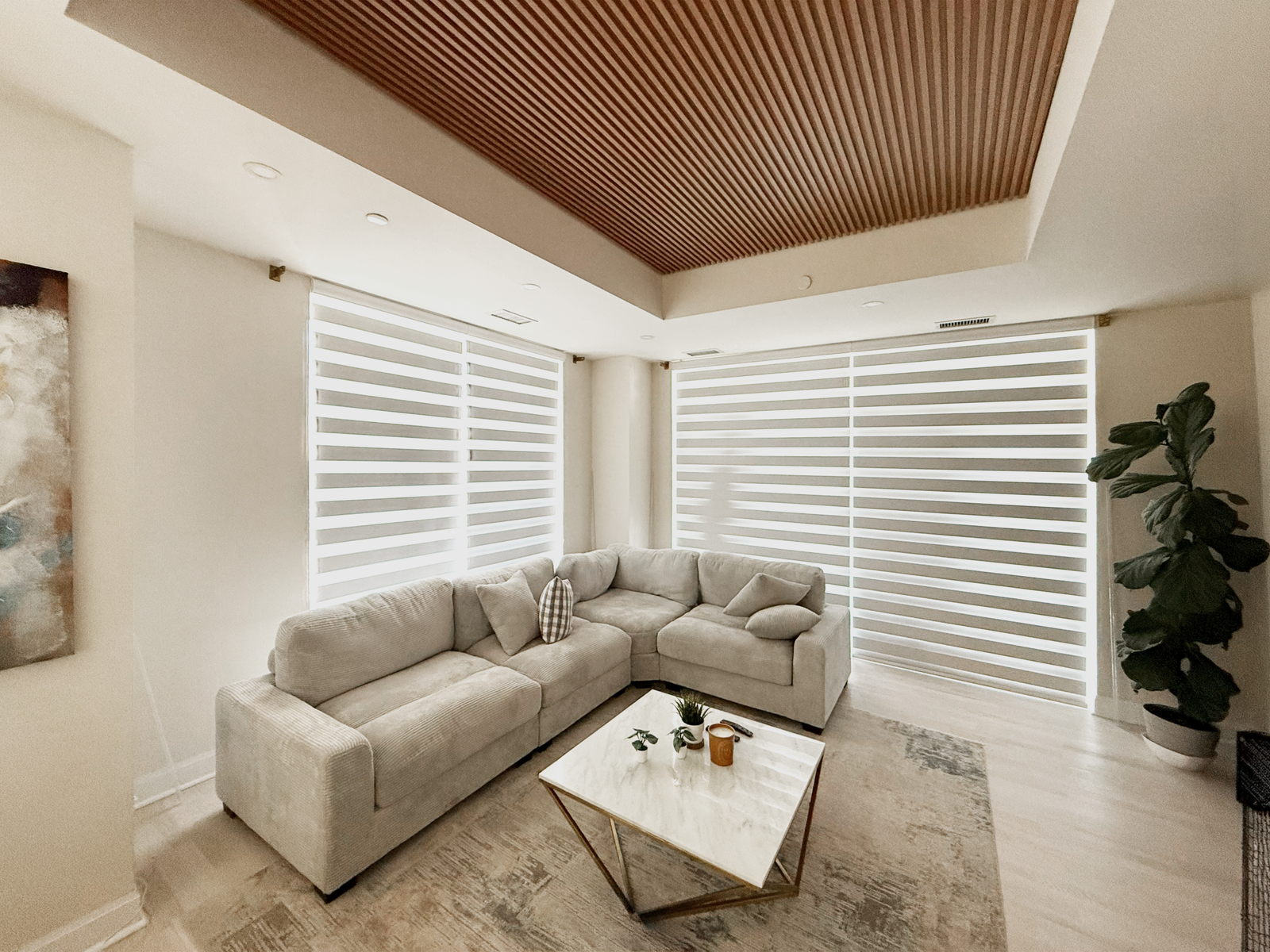
Real homes, real installations
A look at recent window-treatment projects across Toronto and the GTA.
We bring the showroom to your Toronto living room
Our Scarborough showroom on Victoria Park Avenue is right here in the city, so booking a visit is easy from any Toronto neighbourhood. We arrive with everything you need to decide comfortably — in your own light, against your own walls.
- ✓ Fabric, material and hardware samples brought to your home
- ✓ Precise laser measuring of every window
- ✓ Honest, transparent quoting — no hidden fees, no jargon
- ✓ Clean, careful installation by our own team
- ✓ Ongoing aftercare from both GTA locations
GTA homeowners keep choosing us
A perfect 5.0-star Google rating, earned one careful installation at a time.
Game-changer for my downtown Toronto condo! The motorized blackout roller shades in my bedroom are pure magic. Tracy from the design team understood my needs perfectly. The install crew arrived on time and handled everything. 10/10 would recommend!
Wanted privacy without blocking light for my apartment. The dual-layer roller shades are genius — blackout for nights, light-filtering for days. The crew installed 8 windows in 2 hours. Super polite and cleaned up after. 5 stars!
I came across Starlight at the Toronto Home Show and their service was excellent from start to end. Sales rep Mike was super friendly and professional. Their installation team's work was clean, quick and meticulous. Highly recommend — they also give excellent warranty.
Questions Toronto homeowners ask
The questions we are asked most often at the consultation, answered plainly.
A full-home service covers the whole project end to end: an in-home consultation across every room, professional measuring of each opening, product and fabric selection, custom manufacturing, installation, and aftercare.
In practice that means a consultant comes to you with samples and hardware, walks the house room by room, and builds one plan rather than quoting window by window. Measuring is done by us, so the fit is our responsibility rather than yours. Installation is scheduled in one or two visits depending on the size of the home.
In an open-concept home, choose one product family and one colour temperature for every window you can see from a single spot, then vary only the fabric opacity by function.
The reason is simple: on an open main floor the kitchen, dining and living windows are all in view at once, so three different headrails or three different whites read as a mistake. Roller and solar shades work particularly well because they are visually quiet. Where you want softness, add drapery at the living-room end only, rather than everywhere. Our open-concept guide covers the layout question in more depth.
Large windows want either full-height drapery or a wide roller or solar shade - and on anything above reach, motorization, because a large blind is heavy to operate by hand.
Very wide openings are often better split into two or three panels on one headrail than run as a single oversized shade, which sags and operates poorly. For picture windows and walls of glass, a solar shade keeps the view you paid for while controlling glare. Where the window is also the room's main feature, floor-length drapery adds the scale that a shade alone cannot.
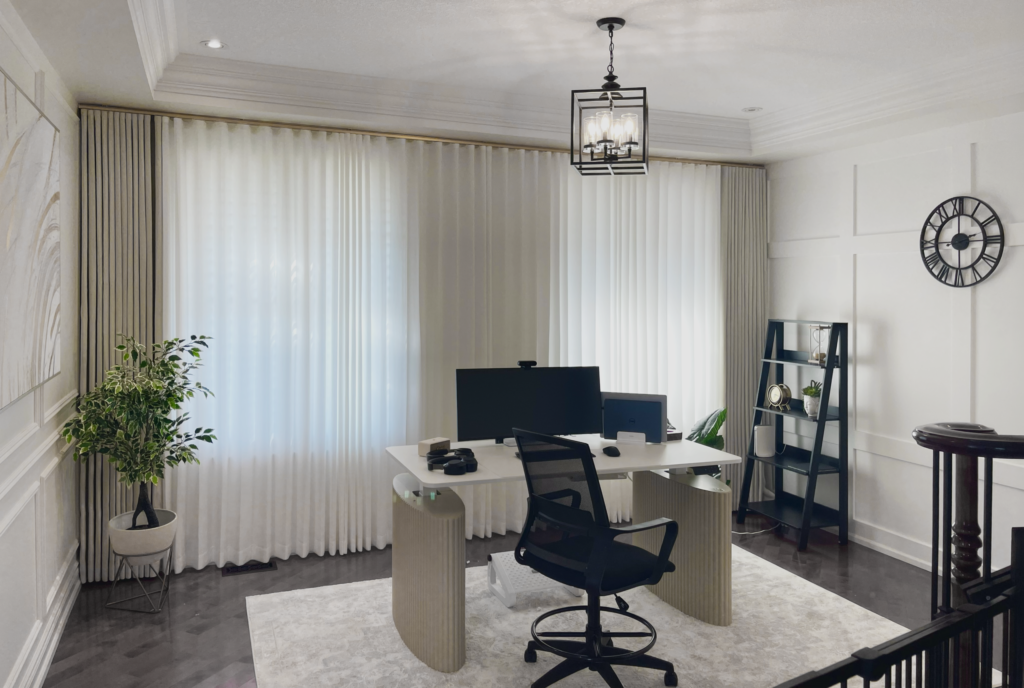
Hang the rod close to the ceiling rather than to the window frame, and run the panels to the floor - the height of the hardware, not the size of the window, is what makes a tall room look right.
Use full-length panels with generous fullness so they still read as fabric rather than as flat sheets. Heavier lined fabric hangs better at height and helps with both insulation and sound in a large room. Motorized tracks are worth considering above about ten feet, where reaching a cord stops being practical. Our guide to curtains for large windows and high ceilings goes through the proportions.
Light-filtering cellular shades are usually the best basement choice: they add privacy and insulation on a cold below-grade wall without taking away the little daylight the room has.
Blackout is rarely right down there unless the room is used as a bedroom, because a basement is already short of light. If the space is damp-prone, avoid natural wood and unlined fabric and choose vinyl or composite instead. Basement windows are often small and high, so a simple cordless mechanism keeps them usable.
For most Toronto high-rise suites the answer is solar or roller shades on the main living glass and blackout shades in the bedroom - and check your building's rules on what the exterior side may look like before ordering.
Floor-to-ceiling glass brings glare and heat rather than a privacy problem during the day, which is what solar shades are built for. At night the situation reverses, so bedrooms and any room used after dark need a genuinely opaque layer. Many buildings require the street-facing side to read white or off-white, which is normally solved with a white backing rather than by changing the fabric you want inside. Check your declaration before ordering rather than after.
Roller, solar and zebra shades suit Toronto condos best - they are slim, operate cleanly on tall glass, and mount neatly where there is little or no window frame.
Zebra shades are popular for the way they shift between privacy and view, though they are not private after dark. Cellular shades are the pick where the suite runs cold or noisy. Wide slat blinds and heavy drapery tend to feel bulky in a condo unless the ceilings are unusually high. There is a fuller breakdown in our guide to the best blinds for Toronto condos.
Light-filtering and top-down-bottom-up shades give daytime privacy while keeping the room bright - the top-down option in particular covers the lower half of the window and leaves the daylight coming in above it.
Sheer and zebra shades do the same job with more view, but all of these reverse after dark: once the lights are on inside, anything you can see out of, someone can see into. If the room is used in the evening, plan a second opaque layer rather than relying on one fabric to do both.
For south and west-facing windows, solar shades rated at 3 to 5 percent openness are usually the right answer - they cut glare and heat while keeping the view.
The openness percentage matters more than the colour: a lower number blocks more. Darker fabrics give better glare control and a clearer view out; lighter fabrics reflect more heat but can glow. Cellular shades are the alternative where heat rather than glare is the main complaint, and lined drapery helps on a west wall that gets hard late-afternoon sun.
A full-home project generally runs from about $1,300 to $20,000 or more, and the three things that move it are the number of windows, the materials you choose, and how many windows are motorized.
A condo suite with a handful of openings in a simple roller fabric sits near the bottom of that range. A detached home with twenty-plus windows, lined drapery, shutters on the front elevation and motors on the hard-to-reach glass sits at the top, and a very large home can exceed it. Motorization is usually the single largest variable. We quote room by room after measuring, so you can see what each decision costs and adjust before anything is ordered - and there is no charge for the consultation.
Allow about two to three weeks from consultation to installation for most homes, since everything is custom-made to your measurements.
The consultation and measuring happen in one visit. Manufacturing is the bulk of the wait. Installation is usually a single day for a condo and one or two days for a larger home. Specialty items - motorized drapery tracks, skylight blinds, unusual shapes - can add time, which is why it helps to identify those windows early. If you are working to a renovation or move-in date, tell us at the consultation and we will work backwards from it.
Motorization is worth it on windows you cannot comfortably reach, and optional everywhere else - the practical test is whether a manual blind in that spot would actually get used.
Stairwell windows, two-storey glass, skylights, windows behind furniture and anything above a kitchen sink are the clear cases. In a bedroom it is a genuine comfort rather than a necessity. Doing it across a whole home also lets you schedule shades to close at sunset or open with the morning, and integrate with Control4 if the house already runs automation. Since running power and specifying motors is far cheaper at installation than as a retrofit, decide which windows get them before the order rather than after.
Every product we make carries a manufacturer warranty covering defects in materials and mechanisms, and if something is not right after installation we come back and put it right.
Motors and their components are covered under their own manufacturer terms. Day to day, most of our products need very little: shutters and roller shades wipe clean, cellular shades take a light vacuum, and drapery is dry-clean or machine-washable depending on the fabric. We will tell you which applies to what you have chosen at the consultation, before you order rather than after.
Every guide, by topic
This page is the overview. Each product and each situation has its own page underneath it — start here, then go as deep as you need.
Curtains & drapery
- Main page
- Custom drapery & curtains in Toronto
- Fabrics & styles
- Sheer drapery · Linen drapery · Blackout curtains
- Guides
- Custom vs ready-made · Ripplefold vs pinch pleat · Curtains for large windows · Blackout curtains for bedrooms · Drapery trends
Blinds & shades
Shutters
- Main page
- California shutters in Toronto
- By material & type
- Wood shutters · PVC shutters · Bi-fold shutters · Sliding shutters · Shutters on doors
- Guides
- Shutter costs, pros & cons · California vs plantation · Are California shutters still in style? · Caring for vinyl shutters
Motorization & smart control
- Main page
- Motorized blinds & shades in Toronto
- Guides
- What motorized blinds cost
- Systems we work with
- Somfy, Neo and A-OK, with Control4 integration where a home already runs automation.
Difficult windows
- By window type
- Skylight blinds · Slanted & angled windows · Unusual window shapes
- Doors & wide openings
- Sliding & patio doors · Large windows & high ceilings
- Guides
- The complete skylight blinds guide
By home & room
Window coverings across the GTA
Just outside Toronto? We serve communities right across the Greater Toronto Area.
Ready to transform your Toronto windows?
We'd love to visit your home, understand your space, and help you find the treatments that feel exactly right. No pressure, no commitment — just a good conversation and beautiful options.
Book Your Free In-Home Consultation → or call us at (416) 346-7989